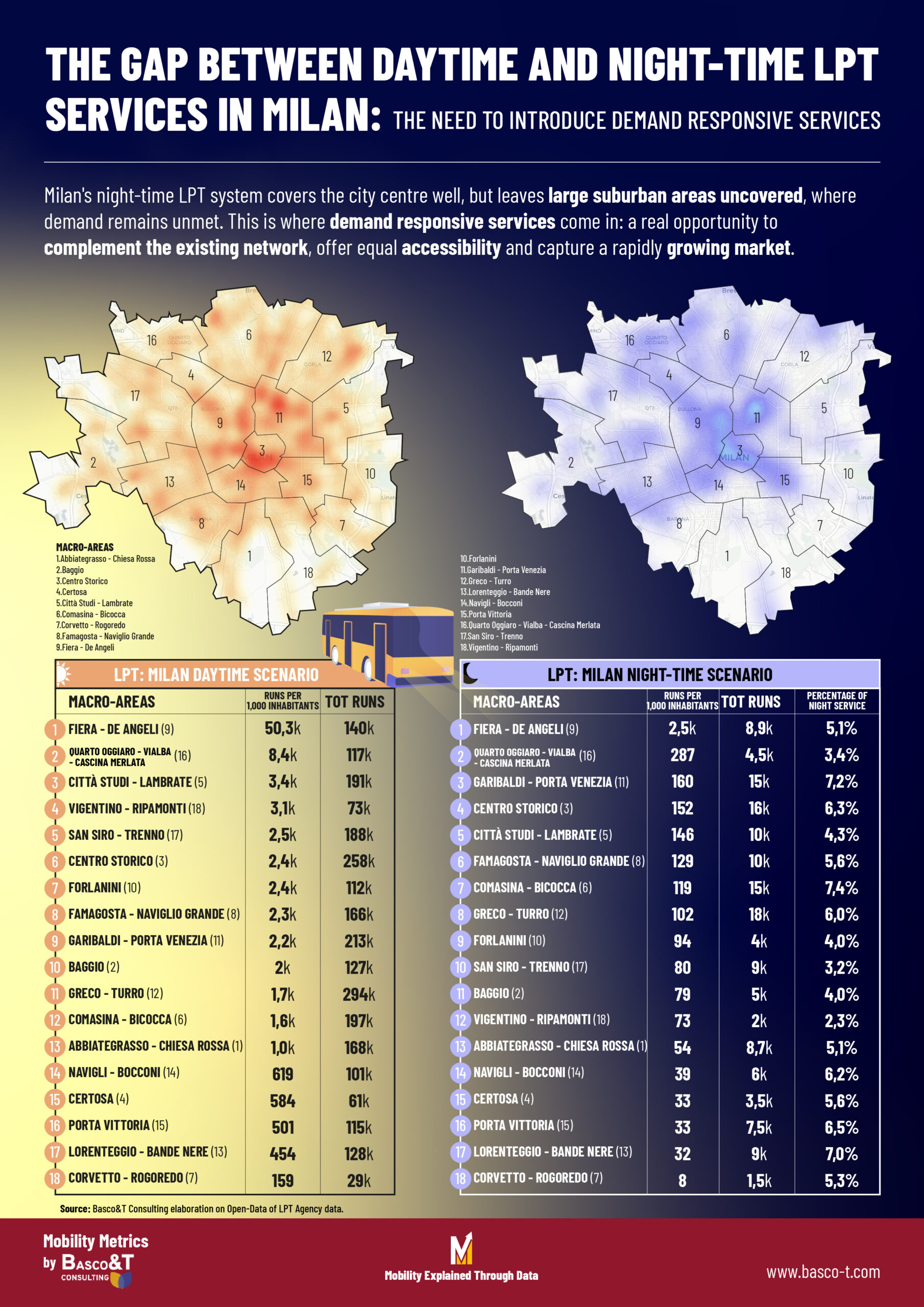
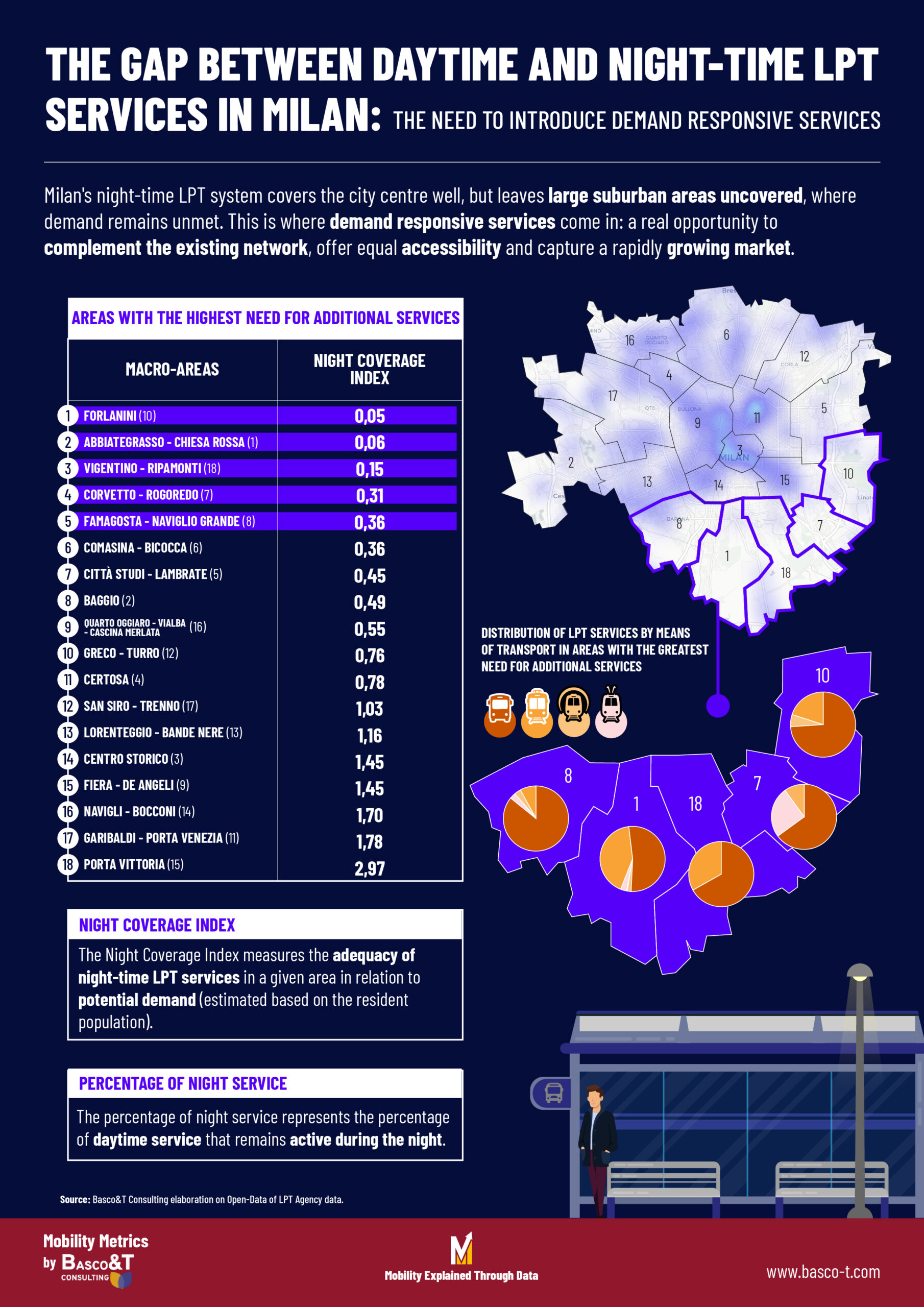
Milan's night-time public transport system covers the city centre well, but leaves large suburban areas uncovered, where demand remains unmet. This is where demand responsive services come in: a real opportunity to complement the existing network, offer equal accessibility and capture a rapidly growing market.
Share on:
Objectives of the analysis
This analysis aims to provide an in-depth assessment of the distribution of local public transport (LPT) services during night-time hours in different areas of the Municipality of Milan. A comparison between night-time services, potential demand (resident population) and daytime services highlights territorial imbalances, systemic critical issues and service discontinuities.
Analysis of Night-time Public Services in Milan
The night-time public transport service consists of four modes of transport: bus, underground, tram and trolleybus. (Table 1)
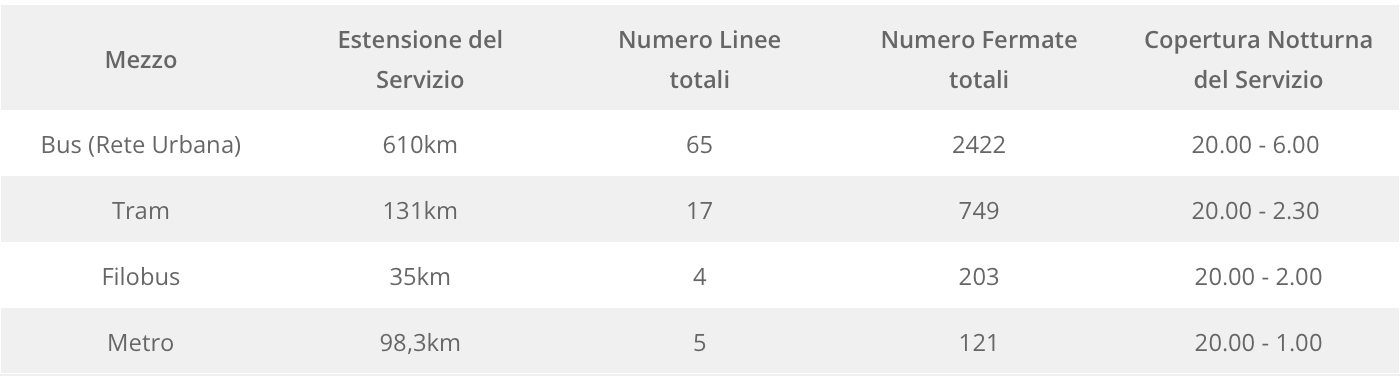
Tabella 1: Offerta TPL a Milano e Copertura Notturna per mezzo
Elaborazione Basco&T Consulting su Report della Mobilità 2023 (AMAT)
- Metro: The easiest way to reach distant areas within the municipality of Milan, however, night service is concentrated in central areas and ends at 1:00 a.m.
- Buses: The city of Milan has a dedicated network of night buses and on-demand neighbourhood buses, designed to ensure urban mobility in the evening and at night (Figure 1). The night bus network comprises 15 lines operating at weekends (Friday and Saturday nights), including six main lines (NM1, NM2, NM3, NM4, N25/26 and N90/91) operating throughout the week. The service runs every 30 minutes and is organised around two strategic hubs, San Babila and Cadorna, which allow for easy interchange with other lines. The radial lines (NM1-NM4) partly follow the routes of the underground lines, ensuring extended service beyond the underground's closing time, while the circular lines (N90/91) provide cross-city connections between neighbourhoods without passing through the city centre. Alongside this network is the neighbourhood bus service, operated by 15 on-demand minibus lines available from 10 p.m. to 2 a.m. This system provides comprehensive coverage of 14 neighbourhoods in the city, connecting them to Milan's main transport network. Neighbourhood buses are characterised by a proximity approach, aimed at connecting local residential areas with the main public transport routes. However, most areas are not covered by this service.
- Tram: Provides 152 night lines connecting the city centre with the surrounding areas. Service is guaranteed until 2.30 a.m.
- Filobus: Connecting the areas of the city centre, the service runs until 2:00 a.m.
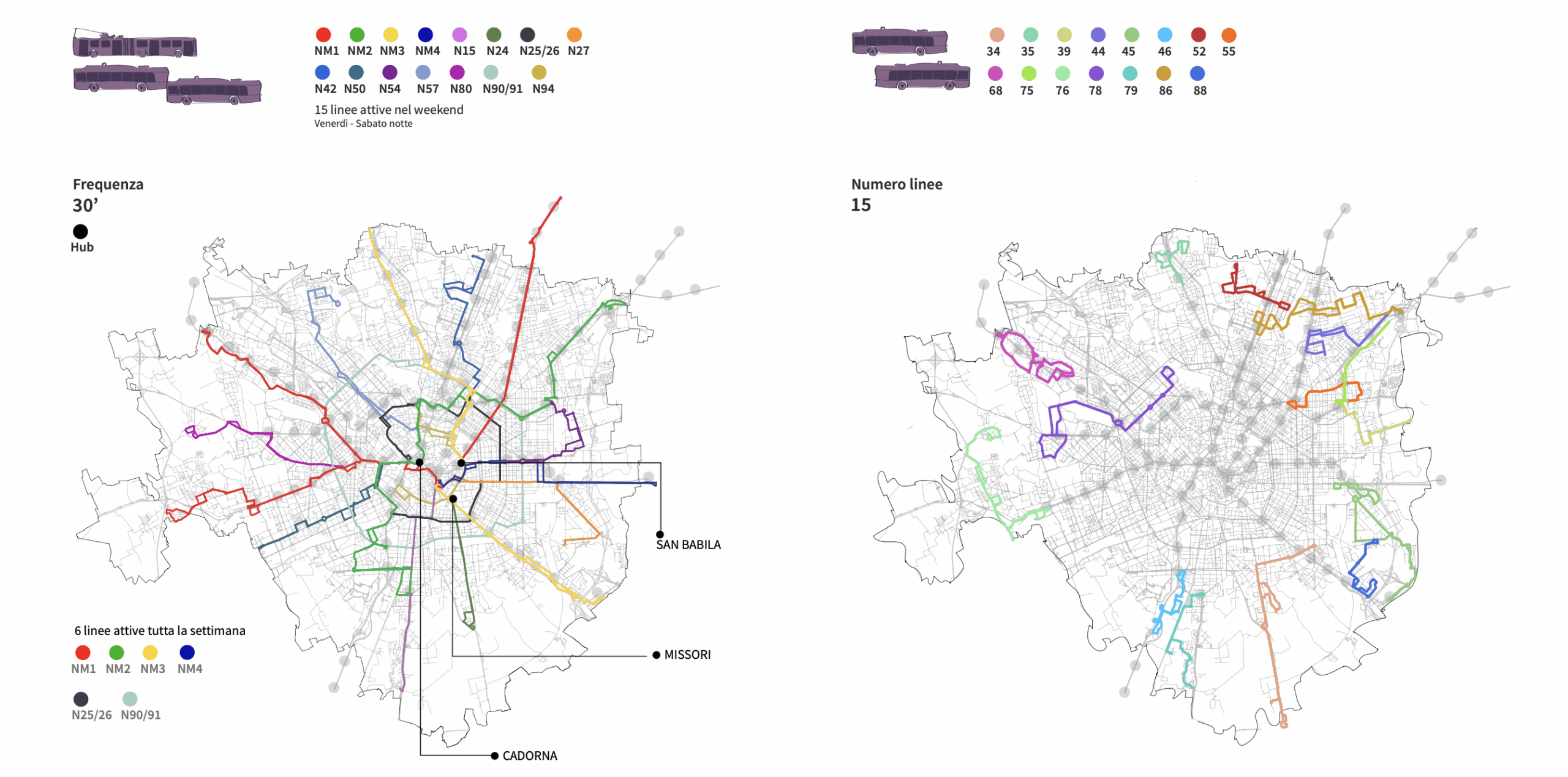
Figure 1: Night bus service, Source: AMAT – report della mobilità 2023
Main Results
The main results are shown in the table below (Table 2).
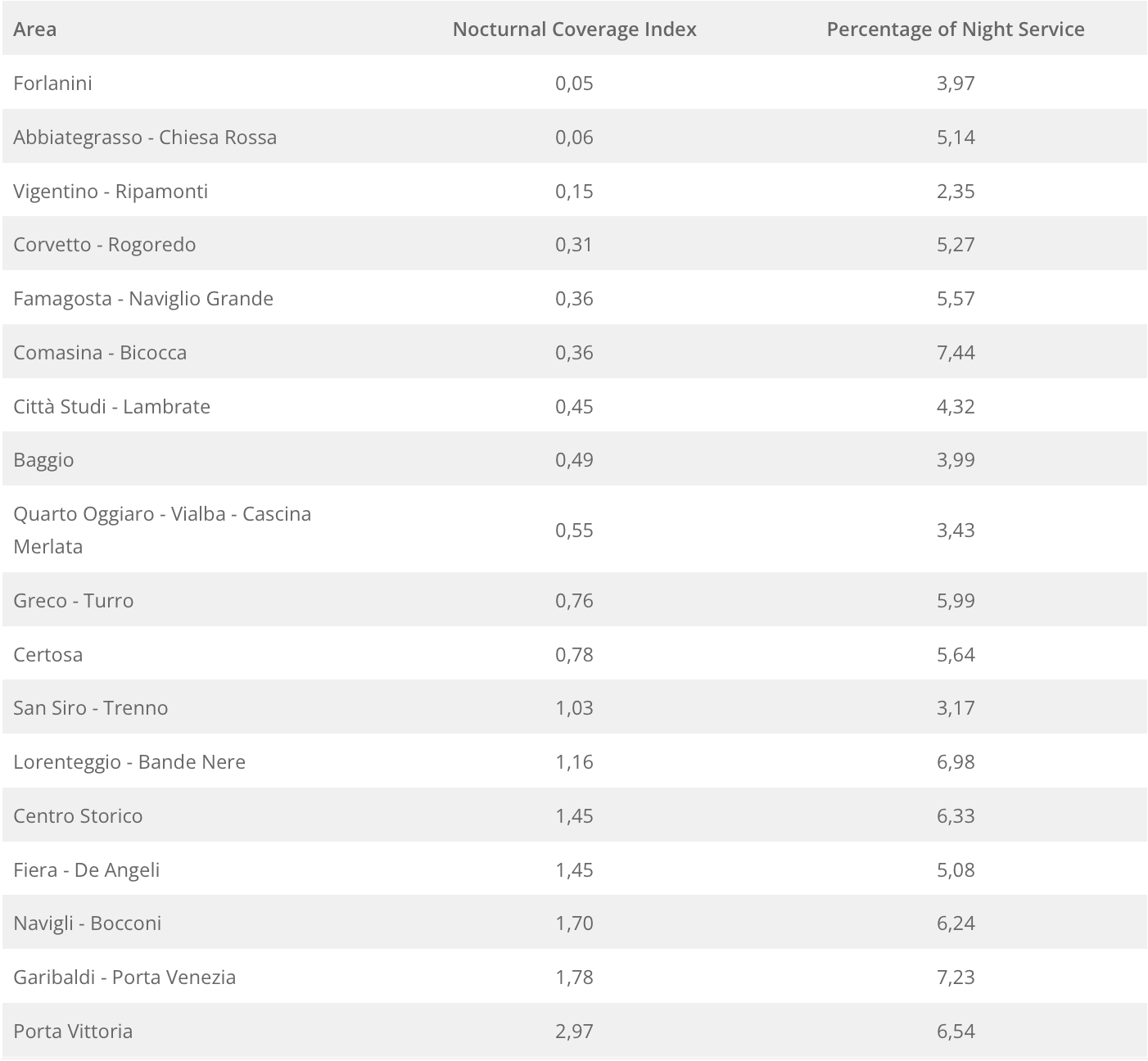
Tabella 2: Elaborazione Basco&T Consulting – Indice di Copertura Notturna e Quota % di Servizio Notturno per Zona
Some peripheral and residential areas, despite having a significant population, have very limited night-time coverage, with a high Night-time Coverage Index (i.e. low supply compared to demand). These are the areas that are underserved at night. The analysis shows that the most critical areas are:
- Quarto Oggiaro – Vialba – Cascina Merlata
- Baggio
- Vigentino – Ripamonti
- Corvetto – Rogoredo
- Forlanini
In these areas, the lack of night-time services highlights the need for targeted measures, such as the introduction of on-demand night-time services.
The percentage of night-time service – i.e. the proportion of daytime service that remains active at night – highlights areas where public transport is drastically reduced at night (high day/night discontinuity):
- Vigentino – Ripamonti
- San Siro – Trenno
- Forlanini
- Baggio
These areas are characterised by two critical issues: low day/night continuity and high unmet demand, making them a priority for corrective action.
Some central or semi-central areas, on the other hand, have good night-time coverage in relation to the resident population, with low Night-time Coverage Index values and a Night-time Service Share of over 6%. These include:
- Navigli – Bocconi
- Garibaldi – Porta Venezia
- Historic Centre
- Porta Vittoria
These areas are adequately covered during the night, demonstrating good continuity of service compared to daytime hours.
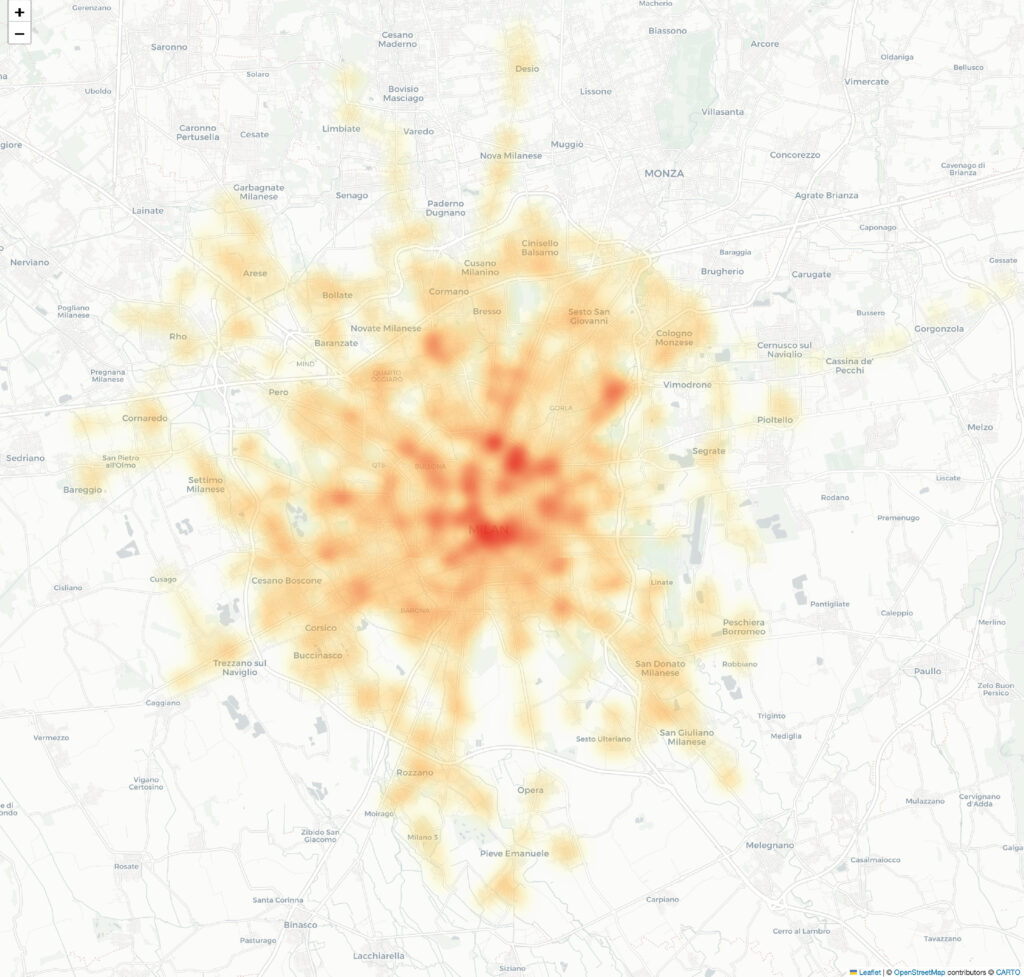
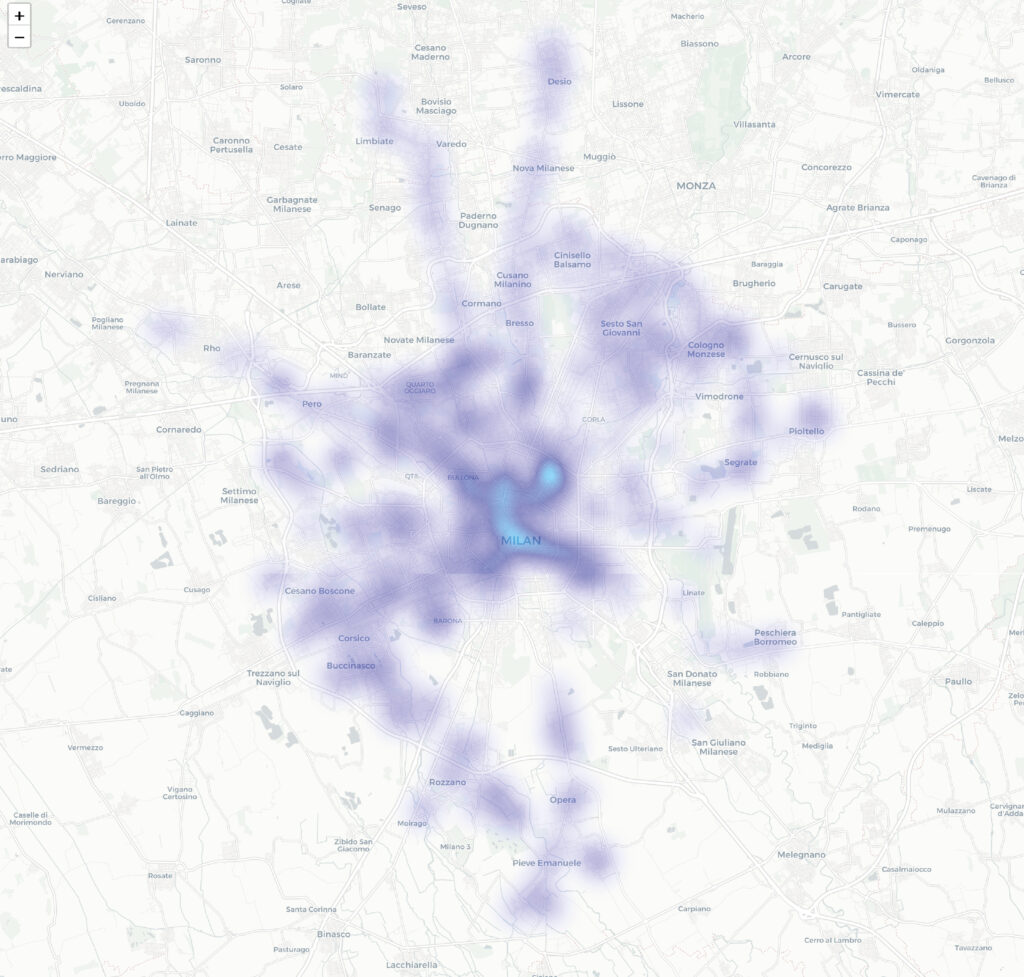
Figure 2: Basco&T Consulting elaboration - Public Transport Offer Intensity – Day vs Night
The analysis shows that Milan's night-time public transport network varies greatly from one area to another. Central and semi-central areas are generally well served, with good continuity compared to daytime services and high percentages of night-time services. In contrast, some peripheral and residential areas (such as Quarto Oggiaro, Baggio, Abbiategrasso, Vigentino and Forlanini) show a structural deficiency, with very low night-time coverage indices and a drastic reduction in service in the evening hours.
These critical issues highlight the need for additional and more flexible services, which is why the Municipality of Milan has introduced tools such as the Radiobus and enhanced night-time bus services that run throughout the night, with the aim of ensuring greater accessibility even in less central areas. Looking ahead, these measures can help bridge the gap between the centre and the suburbs, ensuring more equitable and inclusive night-time mobility.
Dataset and Methodology
Data source and territorial structure
The analysis is based on data referring to 18 aggregate areas of the city of Milan, each of which represents a macro territorial unit (e.g. Fiera - De Angeli, Centro Storico, Baggio, etc.). The data comes from the Open-Data service of the TPL Agency (Agency for Local Public Transport in the Metropolitan City of Milan, Monza and Brianza, Lodi and Pavia). The variables developed are a reworking of the GTFS of routes, stops and timetables of local public transport services in the Agency's mobility area.
The following variables were calculated and collected for each area, some standardised on a scale of 1,000 inhabitants, in order to ensure comparability:
- Daytime journeys per 1,000 inhabitants (numerical value): composed of the number of underground, tram, trolleybus and bus journeys during the daytime, standardised by the number of inhabitants and multiplied by 1,000.
- Night-time journeys per 1,000 inhabitants (numerical value): composed of the number of metro, tram, trolleybus and bus journeys during the night-time period, standardised by the number of inhabitants and multiplied by 1,000.
- Total journeys per 1,000 inhabitants (numerical value): composed of the number of metro, tram, trolleybus and bus journeys during the daytime and night-time.
- Daytime journeys (numerical value): composed of the number of metro, tram, trolleybus and bus journeys during the daytime.
- Night journeys (numerical value): composed of the number of metro, tram, trolleybus and bus journeys during the night.
- Percentage share of night service (percentage value): day/night continuity in local public transport provision.
- Night Coverage Index (numerical value): Capacity of the Zone to meet the demand for night-time local public transport.
- Corrective coefficient (numerical value): measure of the centrality and connection of the area with the surrounding areas.
- Rank offerta TPL (qualitativo: alto, medio, medio-alto, medio-basso, basso): ranking of the area based on the 'night-time coverage index'.
- Population (numerical value): population residing in an area.
- Contribution per vehicle % (percentage value): share of service covered by each vehicle (underground, tram, trolleybus, bus).
- Stops (numerical value): number of stops per vehicle.
- Area (numerical value): size of the reference area
Derived Variables
Night Coverage Index
L’ indice di Copertura Notturna è calcolato come il rapporto tra la Domanda Potenziale e L’ Offerta Notturna per 1000 Abitanti. The Night Coverage Index misura il grado di adeguatezza dell’offerta di trasporto pubblico notturno in una determinata zona rispetto alla domanda potenziale (stimata con la popolazione residente).
Potential Demand is estimated using the number of residents per 1,000 inhabitants, since, in the absence of precise data on actual public transport users, the total population of an area is used as a proxy for transport demand. This approach provides a relative measure of demand, facilitating comparison between different areas, regardless of their population density, using resident population data.
Night-time supply (night-time journeys per 1,000 inhabitants), expressed as the number of journeys per 1,000 inhabitants, is an indicator of the intensity of public transport service available at night. This value allows for a consistent comparison between different areas, highlighting the actual level of accessibility to local public transport during the night.
A correction coefficient (between 0.1 and 1.5) was applied to the Night Coverage Index to take into account the density of services and stops in each area.
- In neighbourhoods characterised by a high density of routes and stops, the coefficient takes on higher values, increasing the index and thus recognising the strategic role of the local network and the main interchange hubs.
- Conversely, in less connected areas, where stops are more isolated and hubs are poorly integrated with the rest of the system, a lower coefficient is applied. This reduces the index, highlighting a real disadvantage in terms of accessibility and service continuity.
Percentage share of night service
The Night Service Percentage represents the percentage of daytime services that remain active during the night. In practical terms, it measures the continuity of public transport services between daytime and night-time hours, calculated as the ratio between night-time and daytime journeys.
For example, a share of 6% indicates that 94% of the service is interrupted during the night, and only a small fraction (6%) of the daytime service continues to be available. This indicator is particularly useful for highlighting areas where there is a significant discontinuity in service between different time slots.
Macro-level analysis
The data was initially collected at the micro-territorial level, dividing each area into sub-areas. Subsequently, this information was aggregated at the area level to provide a summary and representative measure of the characteristics of the Milanese territory as a whole.
Conclusion
The analysis highlights how Milan's night-time public transport system presents a marked territorial divide: on the one hand, central and semi-central areas are adequately covered and guarantee good continuity with the daytime service; on the other, numerous suburban and residential neighbourhoods (Forlanini, Vigentino, Baggio, Corvetto, Quarto Oggiaro) suffer from a severe lack of services, with high levels of unmet potential demand and a clear discontinuity between day and night. These critical issues confirm that the current night-time public transport model, although robust in central areas, fails to meet demand in the suburbs in a comprehensive manner, leaving large population centres uncovered. This is precisely where there is strategic scope for on-demand services.
Flexible solutions, such as Wayla, can integrate with the existing network, offering:
- dynamic coverage during times when traditional transport is unavailable;
- reduced waiting times in poorly served areas;
- greater territorial equity in accessibility, connecting suburbs and residential neighbourhoods to Milan's transport system.
In summary, Milan has a well-structured night-time public transport system, but the real challenge is to ensure mobility in suburban areas as well. Integrating the network with on-demand services is not only an opportunity to reduce territorial inequalities, but also represents a growing market for innovative mobility operators, who are called upon to bridge the gap between the city centre and the suburbs and make the city truly accessible at all times of the day.