L’analisi traccia per la prima volta una mappatura veritiera del fenomeno dell’evasione tariffaria nel Trasporto Pubblico Locale (TPL). L’analisi espone i risultati di una vasta campagna di auditing e data-intelligence che unisce l’analisi dei bilanci di esercizio del settore alle evidenze numeriche derivanti dalle attività di controlleria sul campo svolte da HOLACHECK. Attraverso modelli di ponderazione statistica, queste evidenze reali sono state estese e proiettate su scala nazionale, svelando un tasso di evasione strutturale del 15,6% (circa 1 passeggero su 8). Il fenomeno genera un buco finanziario complessivo stimato di circa 718 milioni di euro all’anno di entrate perse per il settore. Una cifra enorme che si rigenera ciclicamente ogni dodici mesi.

Share on:
The phenomenon of fare evasion in Local Public Transport (LPT) represents one of the main structural challenges to the economic and financial sustainability of the transport sector in Italy. Despite its significance, the phenomenon has historically been the subject of fragmented analyses, often based on local perceptions or ad hoc surveys rather than on established statistical methodologies.
This analysis presents the results of an extensive auditing and data-intelligence campaign that combines an analysis of the sector’s annual financial statements with numerical evidence derived from on-the-ground audit activities carried out by Holacheck.
Methodology and Sample Representativeness
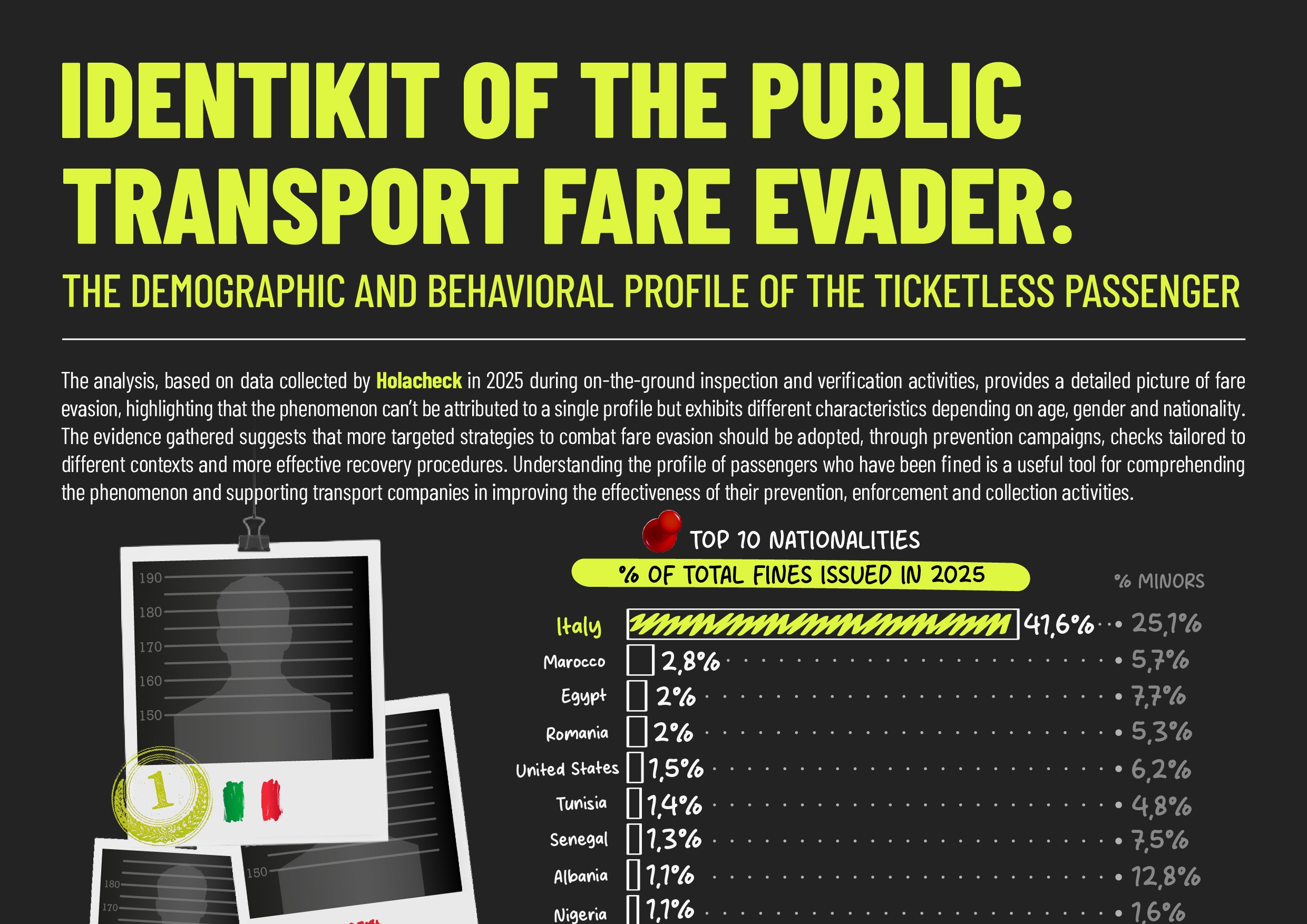
A sample of public transport operators was selected, operating in a variety of contexts (high-density urban areas, suburban networks, metropolitan services, tramways and funicular railways) across the whole of the country. The data were subsequently extrapolated to a national scale using statistical weighting models.

Table 1: Indicators of the representativeness of the statistical sample (year 2025)
The even distribution of the firms in the sample means that the behaviours and evasion rates observed can be regarded as reliable predictive clusters for statistical purposes when projecting results onto a national scale.
Assessment of the Economic Loss
The data, compiled by cross-referencing the number of passengers checked on board with the results of the actual inspections, reveal a double-digit structural fare evasion rate (15.6 per cent), which is consistent both within the sample and at the national level.
The consequences of this unlawful behaviour result in direct economic loss for companies (lost ticket revenue) and a loss of tax revenue for the public purse (10% VAT on the value of the lost ticket revenue).

THE DATA SHOW THAT IN ITALY, APPROXIMATELY ONE IN EIGHT PASSENGERS TRAVELS WITHOUT A VALID TICKET, COSTING THE TRANSPORT SYSTEM APPROXIMATELY 296 MILLION EUROS A YEAR IN DIRECT FARE REVENUE ALONE.
Collection Dynamics and Structural Insolvency
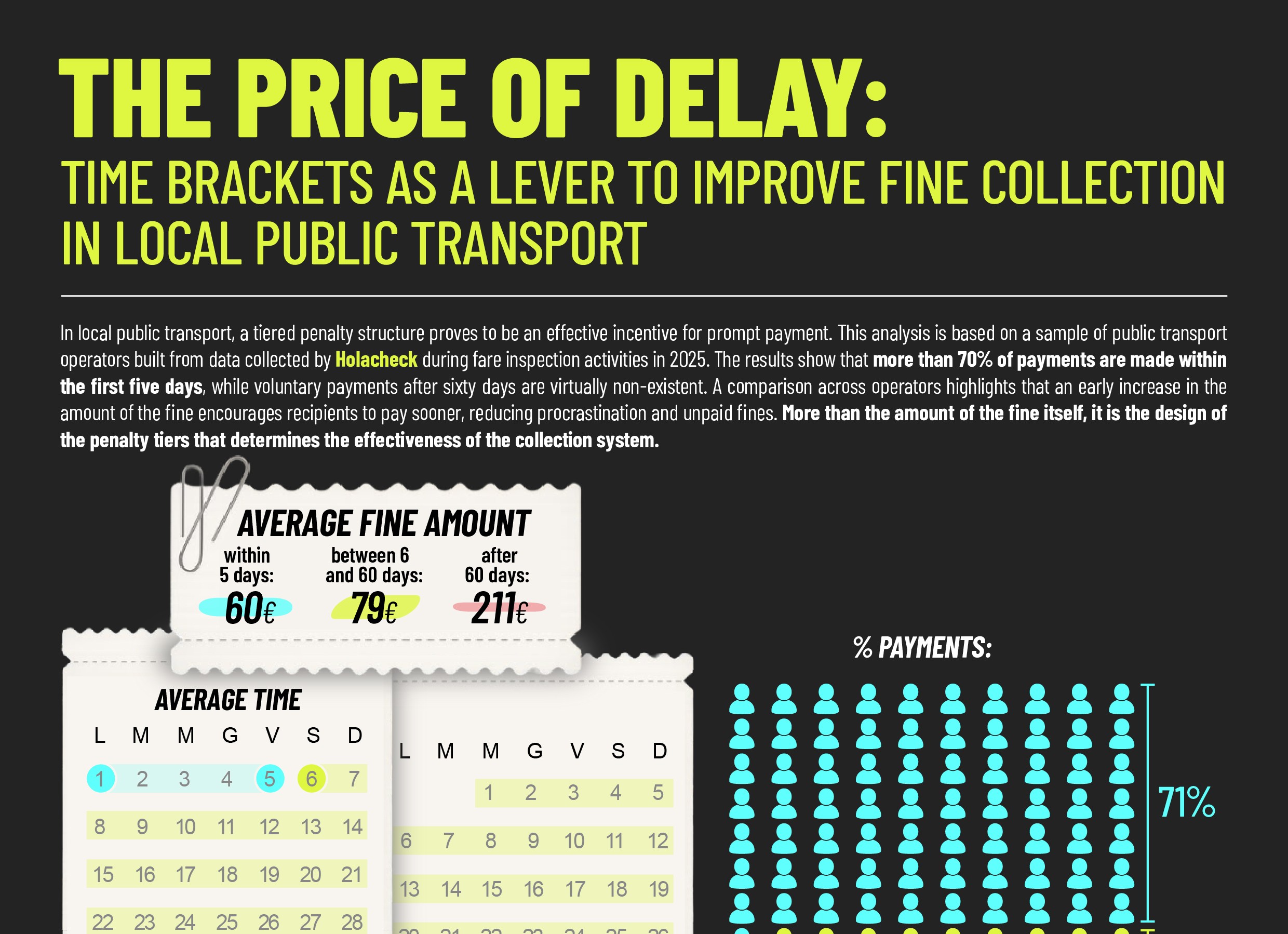
The effectiveness of the penalty system does not end when the infringement is notified (the fine is issued), but is measured by the rate at which the sums due are actually collected. Around 40% is collected; the remaining 60% of the fines issued fall into a state of permanent non-payment, generating a volume of uncollected debt that accumulates and is regenerated cyclically each year, estimated at around €395 million nationwide.
Conclusion
The economic findings presented here demonstrate unequivocally that fare evasion in public transport can no longer be dismissed as a mere micro-social phenomenon or a ‘collateral cost’ of normal operations. From a macroeconomic perspective, this phenomenon generates an estimated total financial shortfall of around 718 million euros per year in lost revenue for the sector. This is a huge figure that recurs cyclically every twelve months and stems from the combination of three critical factors:
- €296 million in lost direct revenue from the sale of travel tickets;
- €395 million in fines that remain unpaid and uncollected;
- €27 million in evaded VAT on unsold tickets, representing a direct loss to the Treasury
Combating fare evasion is therefore not a punitive measure, but the fundamental prerequisite for setting in motion a virtuous cycle: greater compliance on board means more resources, better services and fairer public transport for everyone.