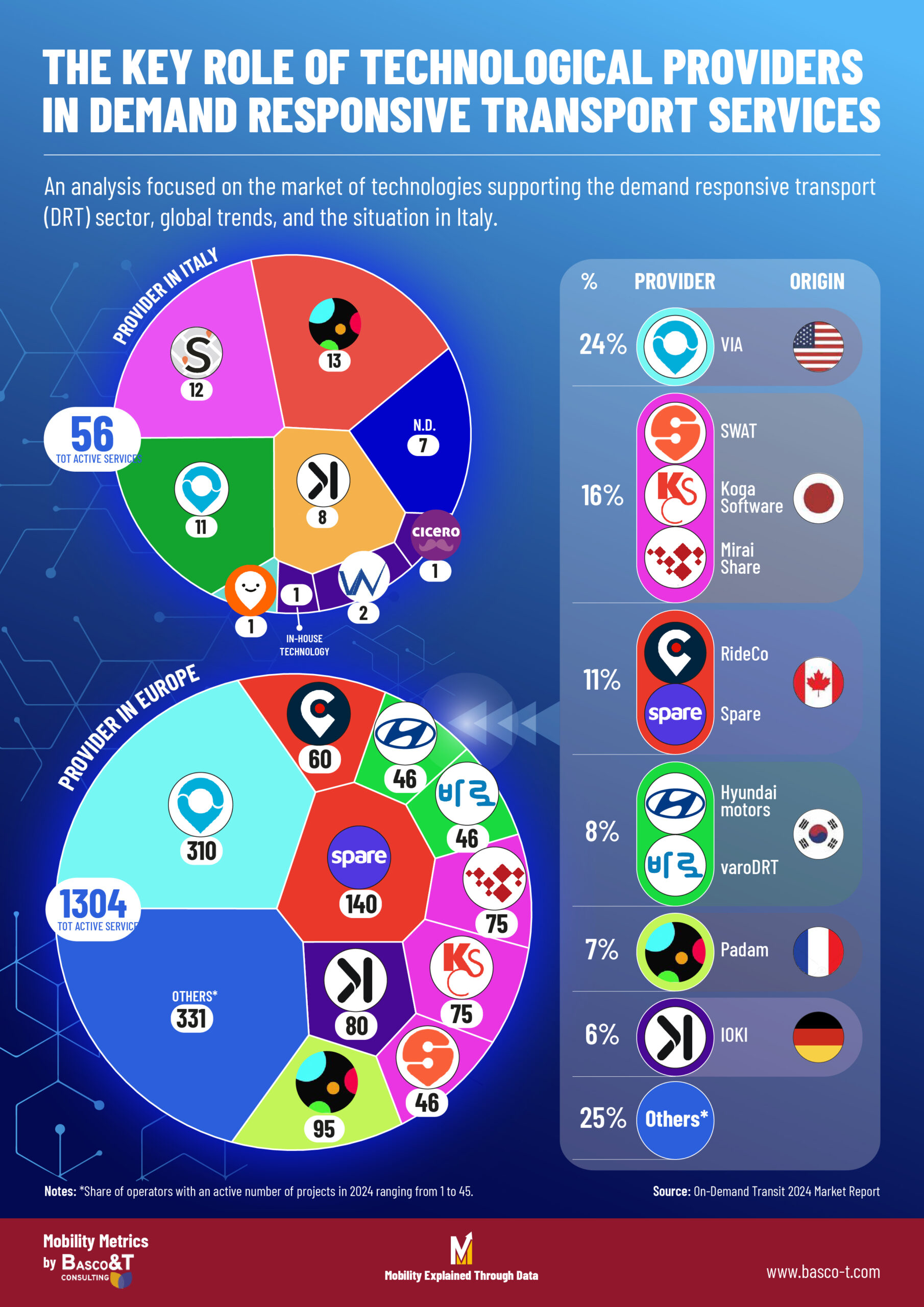
An analysis focused on the market of technologies supporting the demand responsive transport (DRT) sector, global trends, and the situation in Italy.
Share on:
This analysis is based on data and findings from the annualOn-Demand Transit 2024 Market Report“ the study “DRT Digital and Operational Innovations in CE Regions and Engaged Areas” Interreg Central Europe, and a dataset compiled from information provided by theObservatory Sharing Mobilityintegrated with official data from companies operating in the DRT sector.
Technology plays a key role in the efficiency and sustainability of Demand Responsive Transport service (DRT), a mobility model based on flexibility and user demand adaptation. The integration of advanced algorithms, digital platforms, and smart booking systems enables route optimization, reduces waiting times, and improves operational efficiency, making these services competitive with traditional transport modes.
The adoption of artificial intelligence and machine learning technologies is further transforming the sector, allowing for predictive demand management and greater adaptability to user needs. In an era of growing focus on sustainability and transport efficiency, technological platforms serve as the real driver of innovation in DRT.
A fully digitalized on-demand transport system consists of four main architectural components, without which the service could not function:
▪ Travel Dispatch Center (TDC);
▪ DRT device for vehicles
▪ User devices
▪ Communication network
Digital platform providers play a central role in DRT development, offering software solutions for booking management, dynamic route planning, and integration with public transport payment and ticketing systems. Thanks to these tools, mobility operators can optimize their fleets, improve vehicle load factors, and ensure a more reliable and accessible service.
The on-demand transport sector is a highly competitive market for technology providers. Among the top global operators ranked by the number of awarded projects (both active and upcoming), the U.S.-based Via has surpassed 400 projects, while Canada’s Spare has exceeded 200. Meanwhile, South Korean operators Hyundai and varoDRT remain among the top 10 in this ranking.
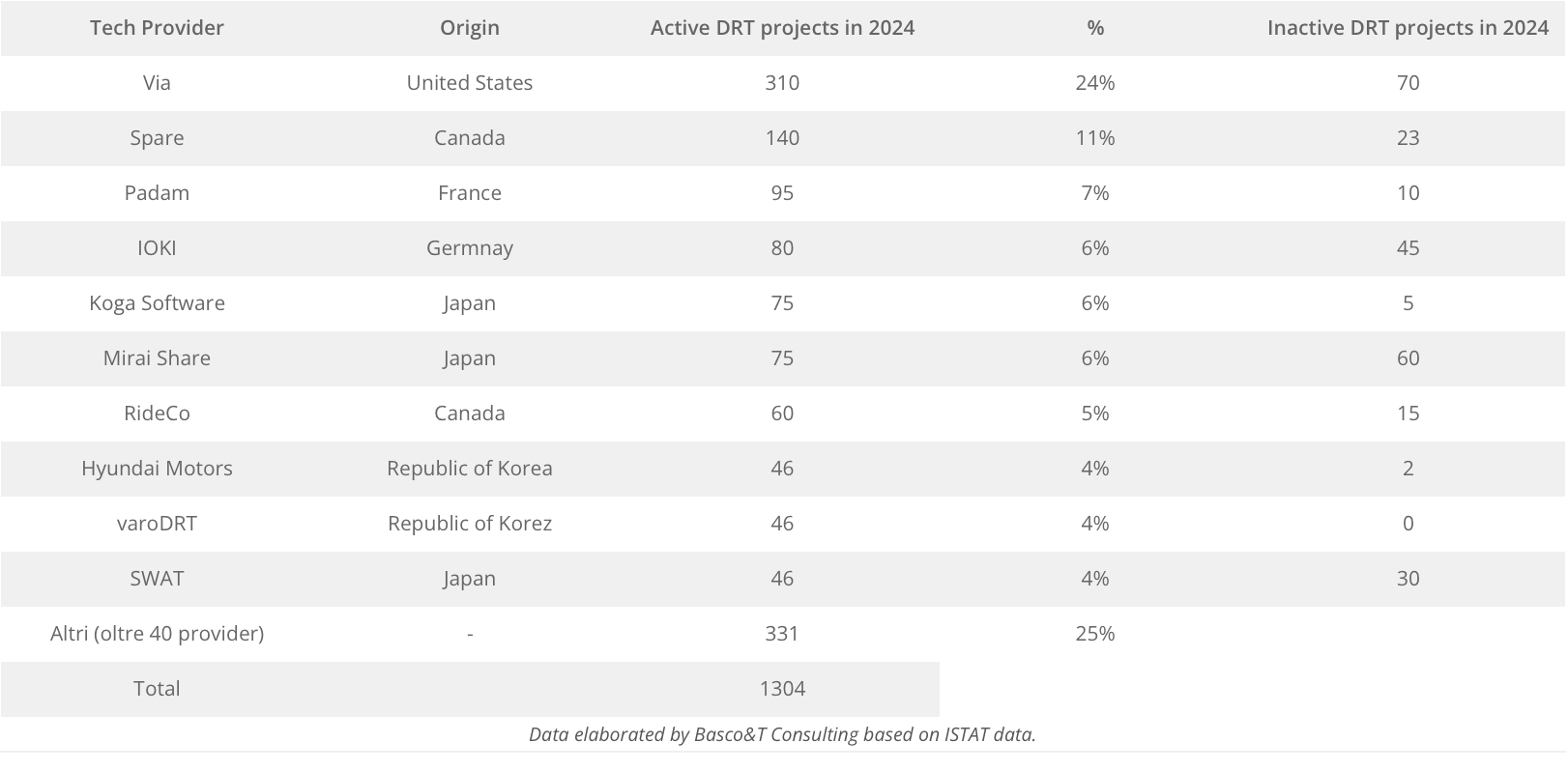
Overall, Via holds a global market share of approximately 24%, with its most significant markets in North America, DACH (Germany, Austria, and Switzerland), and Europe. In Asia, however, the market is dominated by local operators such as varoDRT and Hyundai Motors.
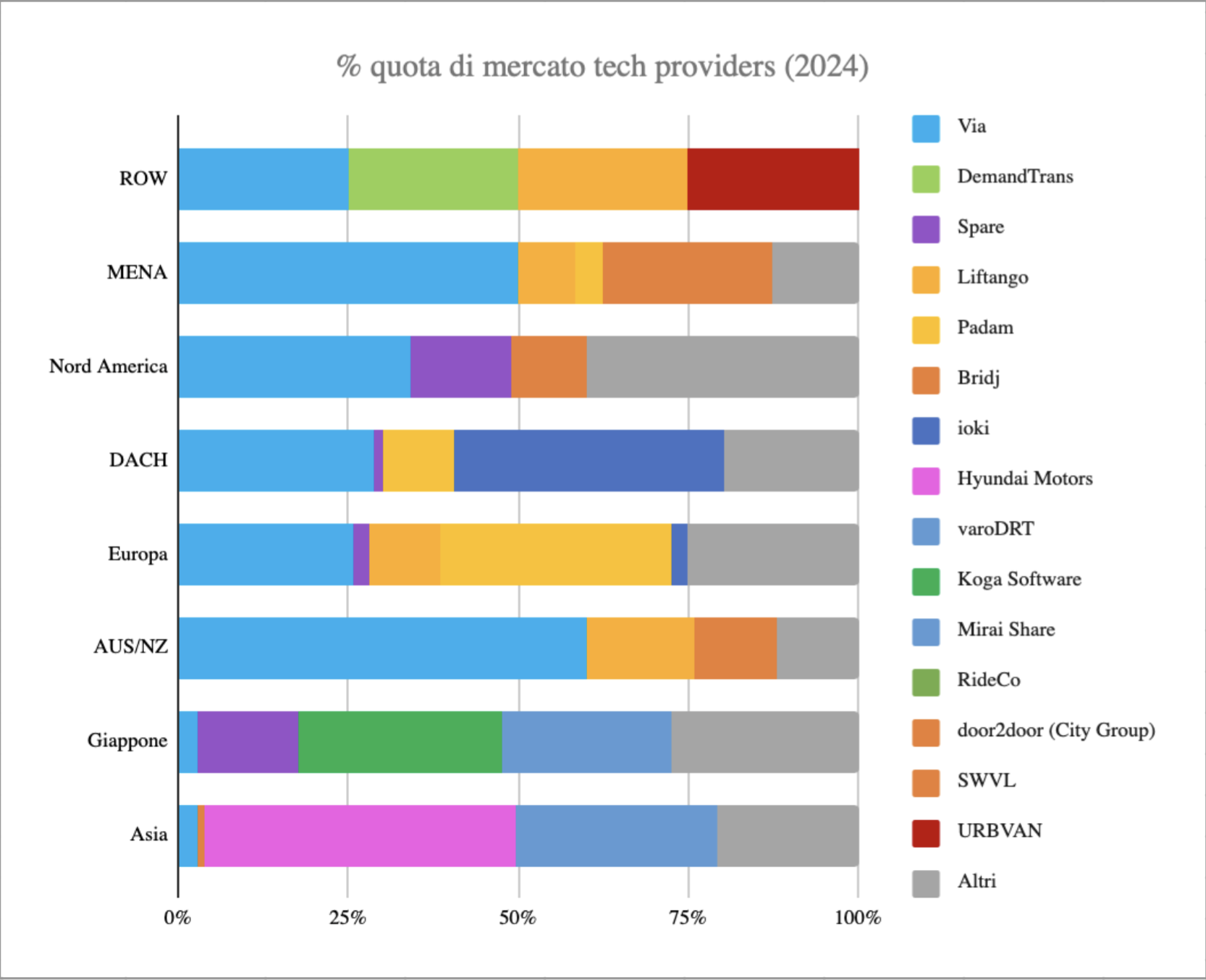
Notes:
MENA: Middle East and North Africa
DACH: Germany (D), Austria (A) and Switzerland (CH)
AUS/NZ: Australia and New Zealand
ROW: Rest of the World
In Italy, the French company Padam Mobility holds 23% of the market, followed by Spain’s Shotl (21%) and Via with 20%. Additionally, 7.1% of Italian DRT projects rely on technological platforms developed by national providers.
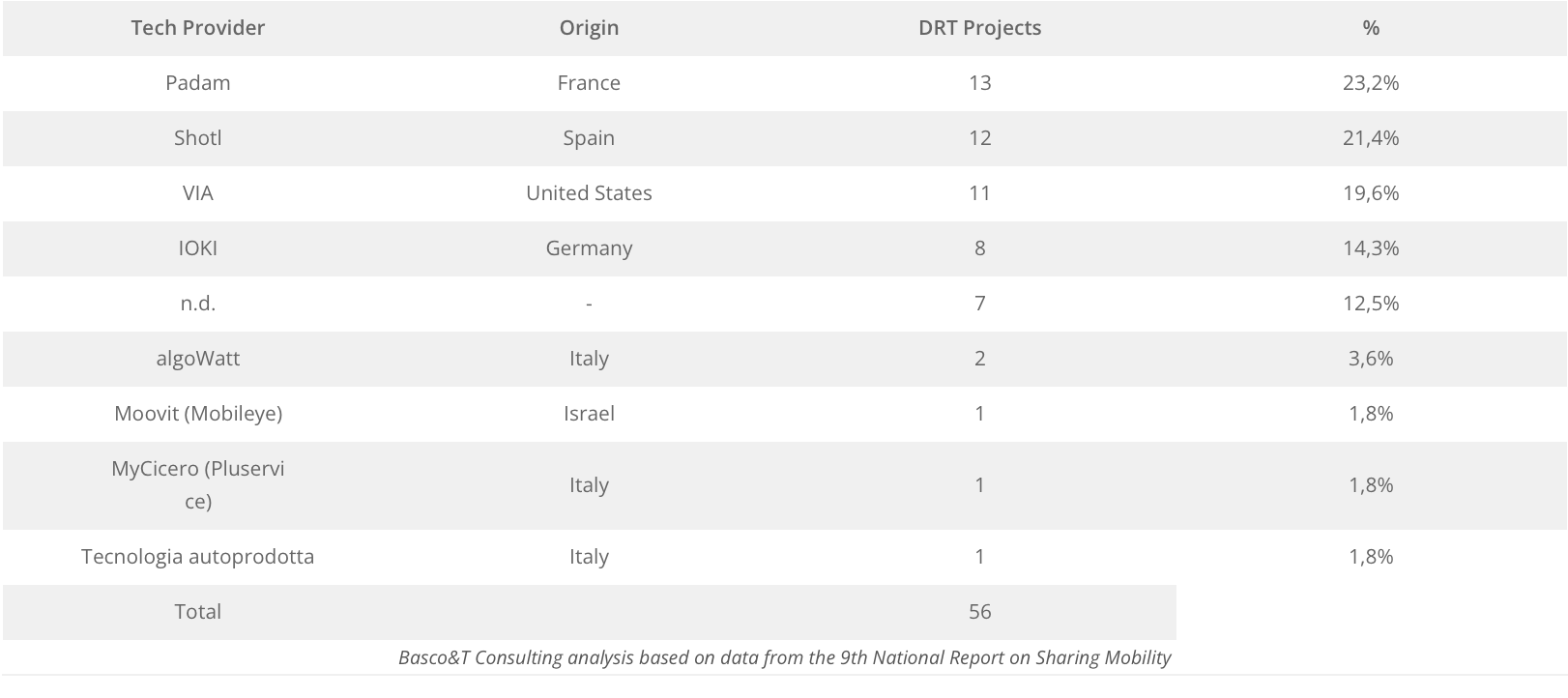
The growth of demand responsive transport services (DRT) is closely tied to technological innovation and competition among leading digital platform providers. While the global market is led by operators such as Via and Spare, in Italy, Padam Mobilityand Shotl dominate, with a significant presence of locally developed solutions. The sector’s evolution will depend on the ability to integrate advanced tools to optimize operational efficiency and ensure increasingly accessible services.