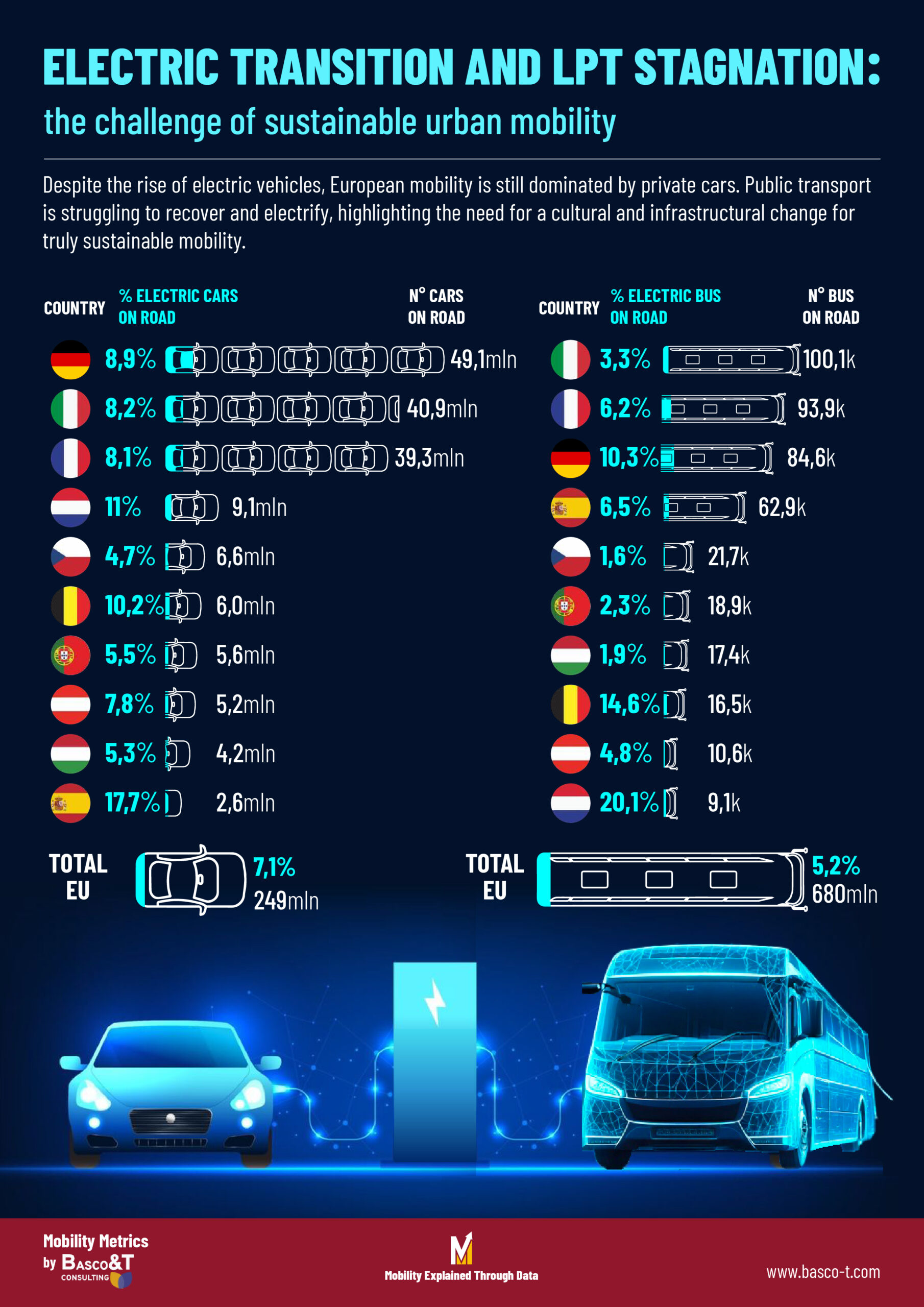
Despite the rise of electric vehicles, European mobility is still dominated by private cars. Public transport is struggling to recover and electrify, highlighting the need for a cultural and infrastructural change for truly sustainable mobility.
The analysis shows that the energy transition in the European mobility sector is progressing at two speeds: while sales of electric cars are growing strongly, public road transport remains largely unchanged.
Share on:
Growth in private mobility and spread of electric cars
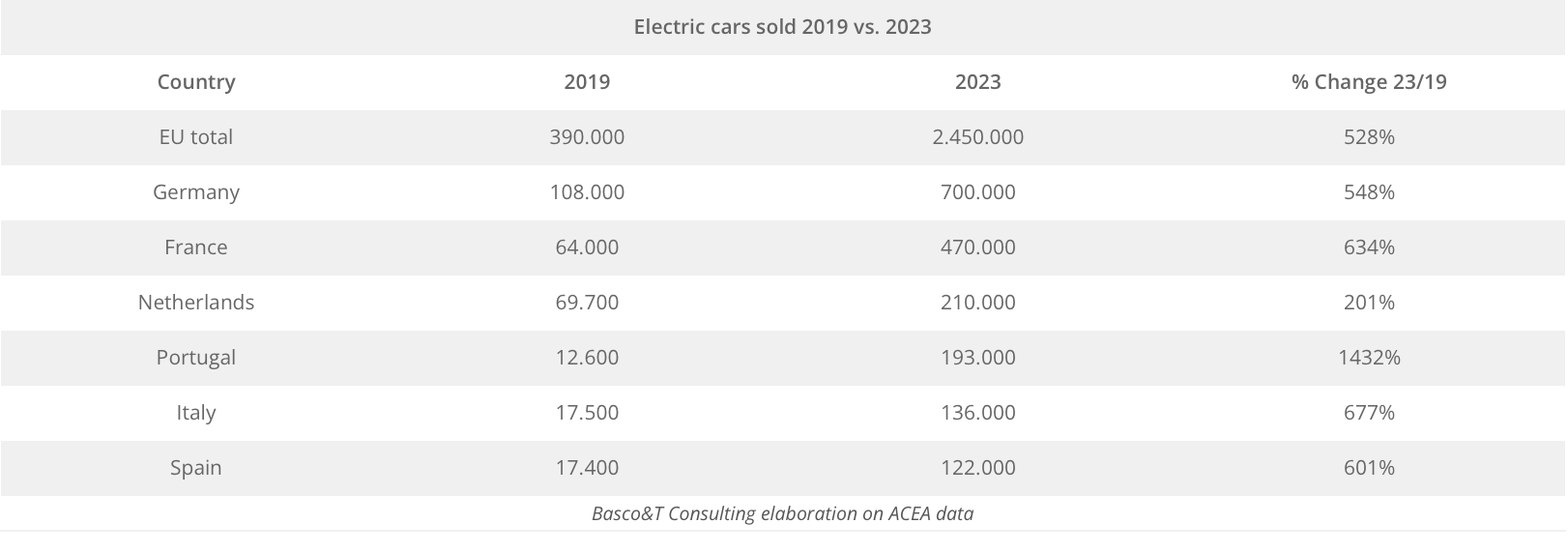
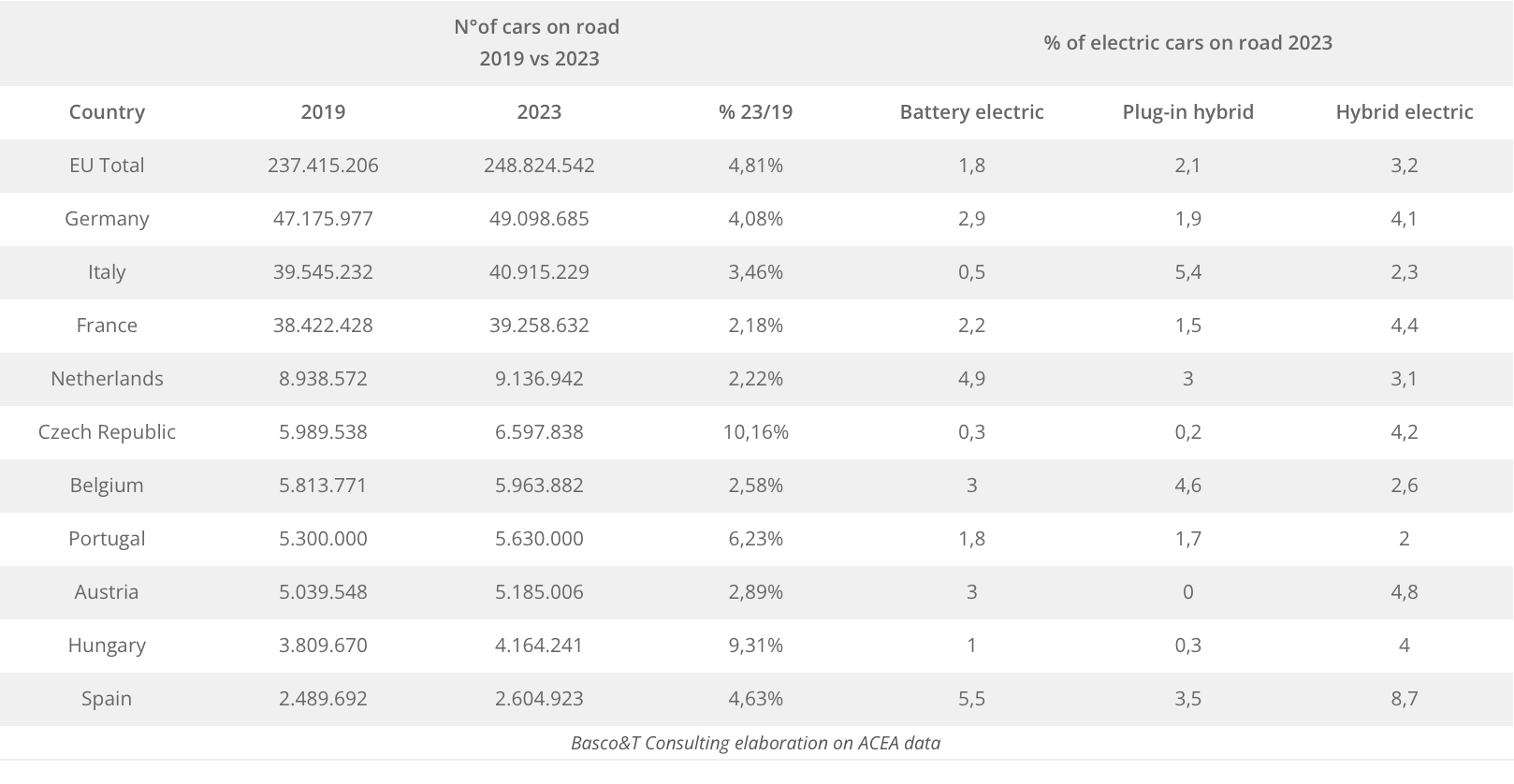
In recent years, mobility in Europe has undergone significant transformations, with an increase in the number of cars sold, a growth in the share of electric vehicles and an evolution of public transport. However, according to data from the ACEA report, the transition to a more sustainable model is proceeding at different rates in different countries. An analysis of data collected by Our World In Data shows that between 2019 and 2023 the total number of cars in the European Union increased by 5 per cent, from 237 million to around 249 million. The largest increases were recorded in the Czech Republic (+10.2 per cent) and Hungary (+9.3 per cent), while France, Germany and Italy recorded smaller increases (between 2 and 4 per cent). Although the number of vehicles on the road continues to grow, the composition of the car fleet is changing: sales of electric cars increased by 528% between 2019 and 2023, from 390,000 to over 2 million units. The countries with the largest increases are Portugal (+1,432%), Italy (+677%) and France (+634%).
However, in terms of fleet share, electric cars still account for less than 2%, signalling that the transition is still in its early stages.
Environmental impact of road transport
In EU countries, bus transport produces less carbon dioxide (CO₂) per passenger-kilometre than other means of transport. Despite this, the transport sector remains a major source of greenhouse gas emissions in the EU.
In 2022, long-distance buses emitted around 31 grams of CO₂ per passenger-kilometre, which is significantly less than aviation, which varies between 30 and 110 grams per passenger-kilometre.
CO₂ emissions from cars vary widely depending on the type of engine and fuel used. In 2022, average car emissions were 166 grams of CO₂ equivalent per passenger-kilometre, assuming an average occupancy of 1.4 people per vehicle.
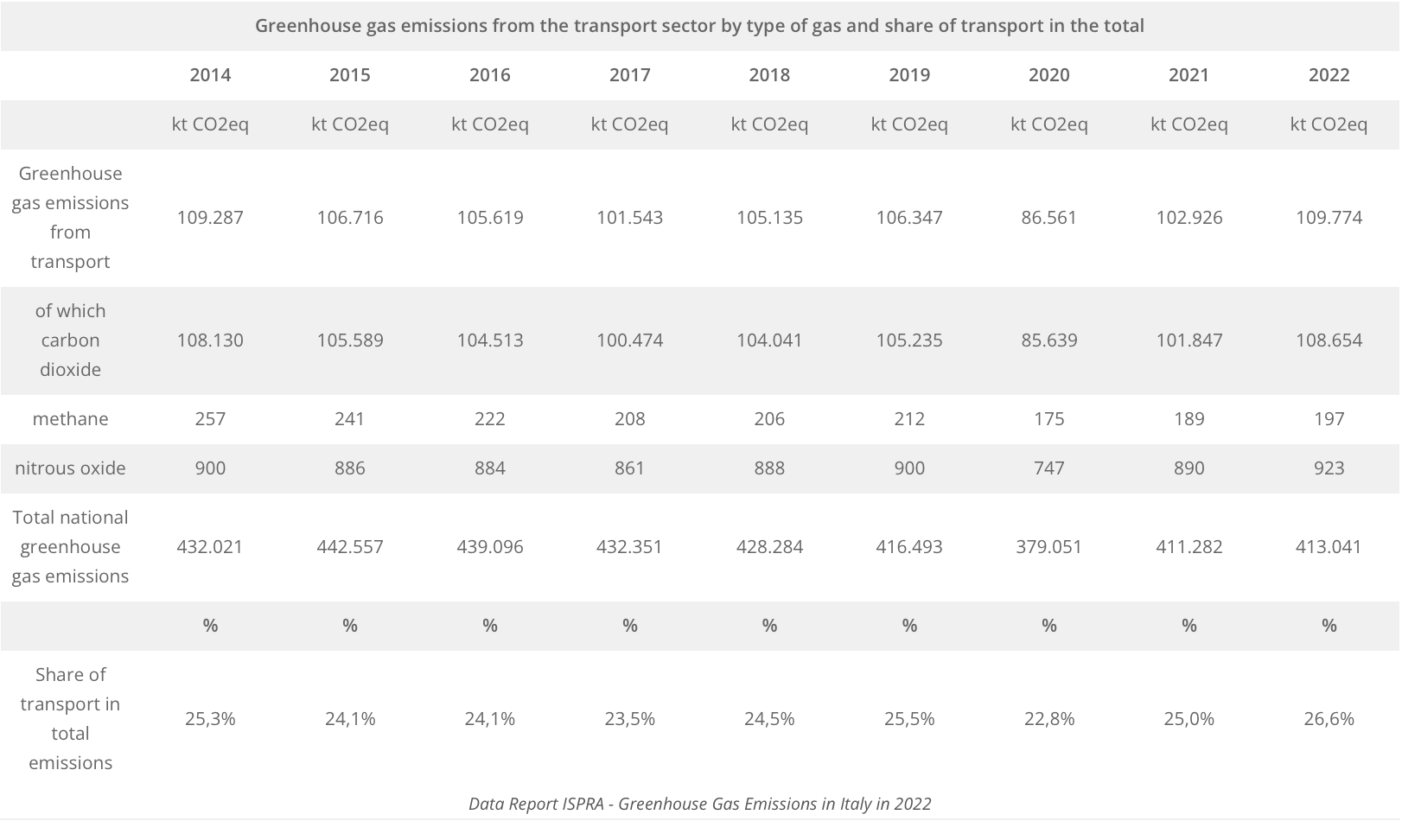
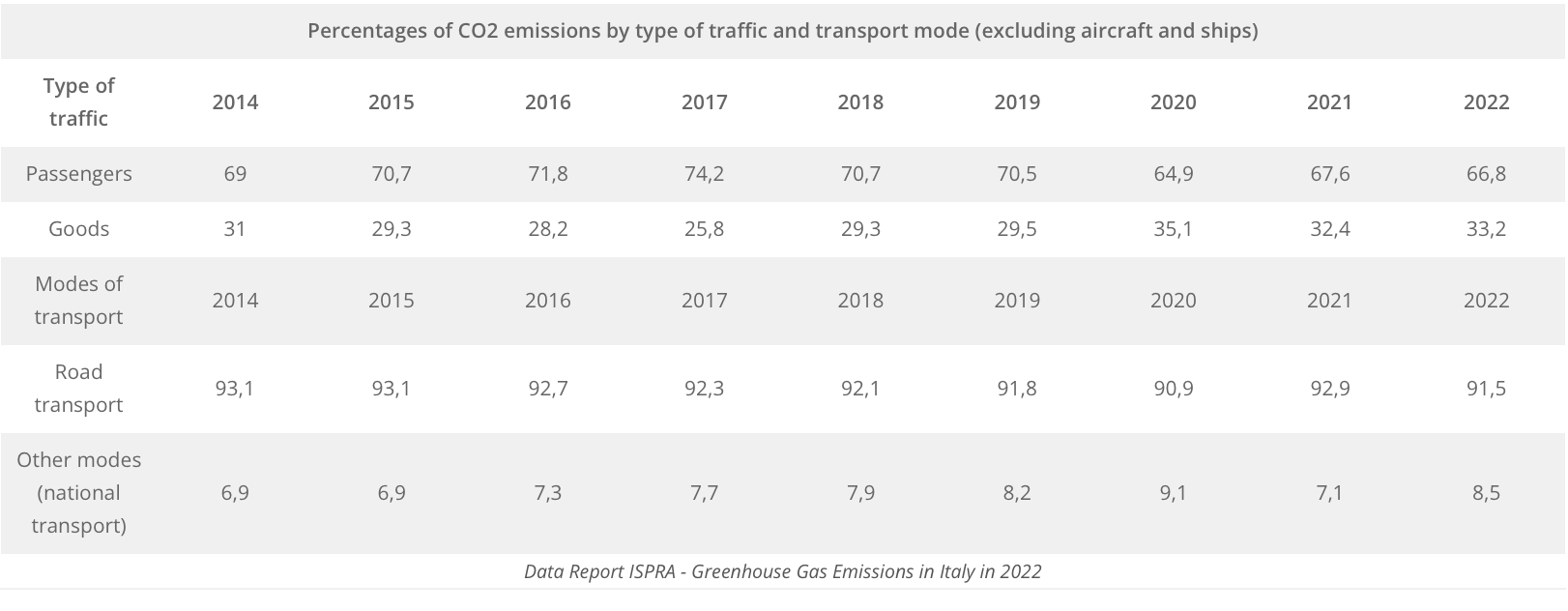
Long-distance buses are therefore the ones with the lowest climate impact. According to data from the Federal Environment Agency, they produced around 31 grams of CO₂ per passenger-kilometre in 2022, a figure that is largely stable compared to 30 grams in 2019, the year before the pandemic. According to the ISPRA Report, the transport sector in Italy was responsible for 26.6% of total greenhouse gas emissions in 2022, with road transport accounting for more than 92% of the sector's emissions. Passenger cars are the main source of emissions in road transport, contributing 60.7% of the sector's CO₂ emissions (European Parliament data). In 2022, emissions from the transport sector reached 109,774.4 kt CO₂eq, returning to pre-pandemic levels.
Stagnation of public road transport
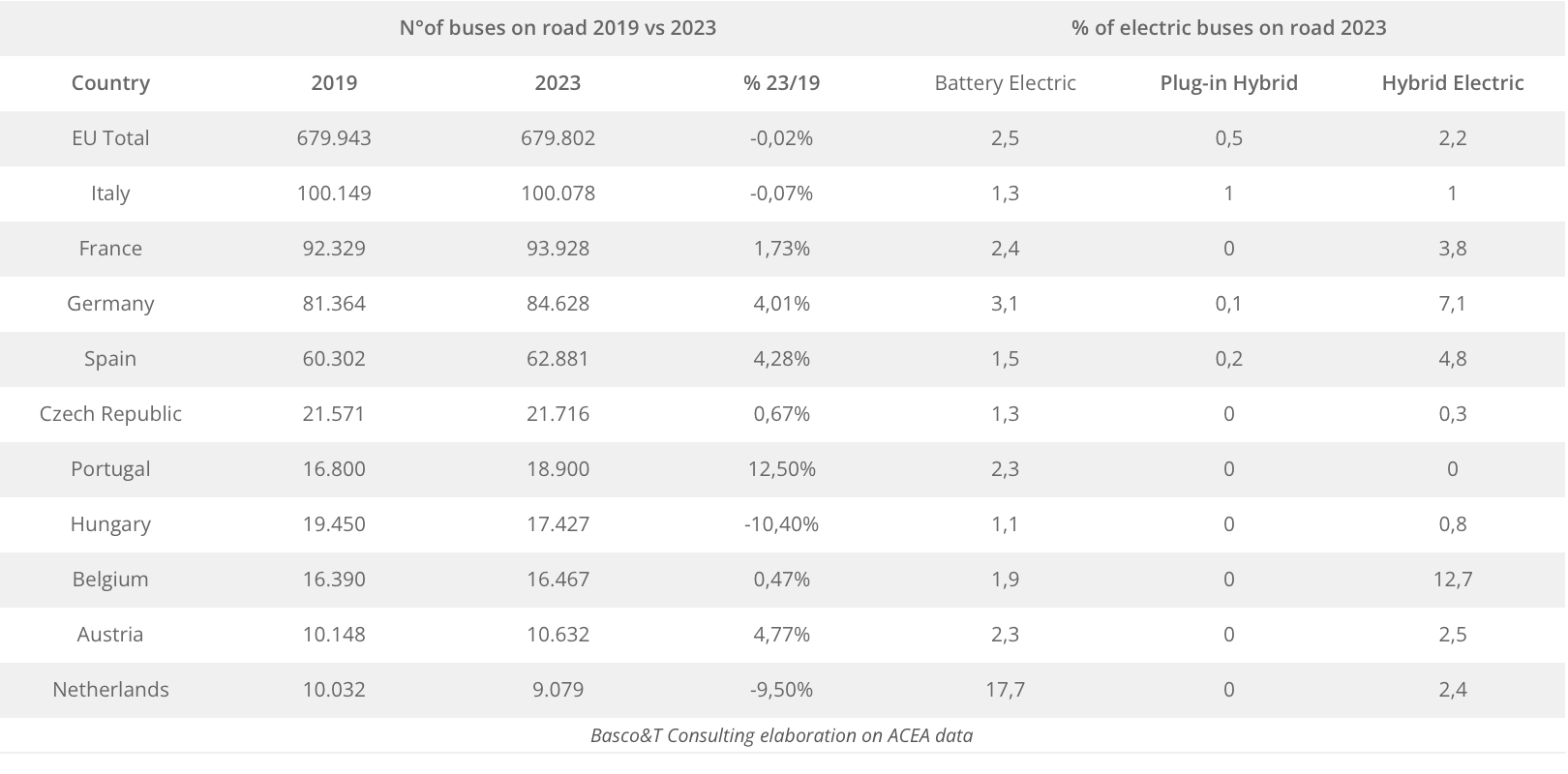
In contrast to the growth of passenger cars, the number of buses on the road remained essentially unchanged: from 679,943 in 2019 to 679,802 in 2023. Some countries recorded a reduction in the fleet, such as Hungary (-10.4%) and the Netherlands (-9.5%), while others, such as Portugal (+12.5%) and Germany (+4.0%), recorded growth. In Italy, the number of buses remained stable.
The number of electric buses is also growing, but with large differences between countries. In 2023, only 2.5% of the buses in circulation in the EU were fully electric (BEV), while hybrids accounted for 2.2%. The Netherlands leads the transition with 17.7% electric buses, followed by Germany (3.1%) and France (2.4%). In Italy, only 1.3% of buses are electric, while 1% are hybrid. Belgium, on the other hand, has a significant share of hybrid buses (12.7%).
Evolution of the electric bus market
Although the overall number of buses on the road is stable, registrations of electric buses are increasing strongly. According to the E-Motus report “Evolution of electrification in local public transport”, the share of new electric buses increased from 12% in 2019 to 40% in 2023. Germany and the United Kingdom are the market leaders, while Italy and Spain have seen an acceleration in 2023: Italy went from 108 registrations in 2022 to 378 in 2023. France, on the contrary, showed a slowdown.
Investments and supporting policies
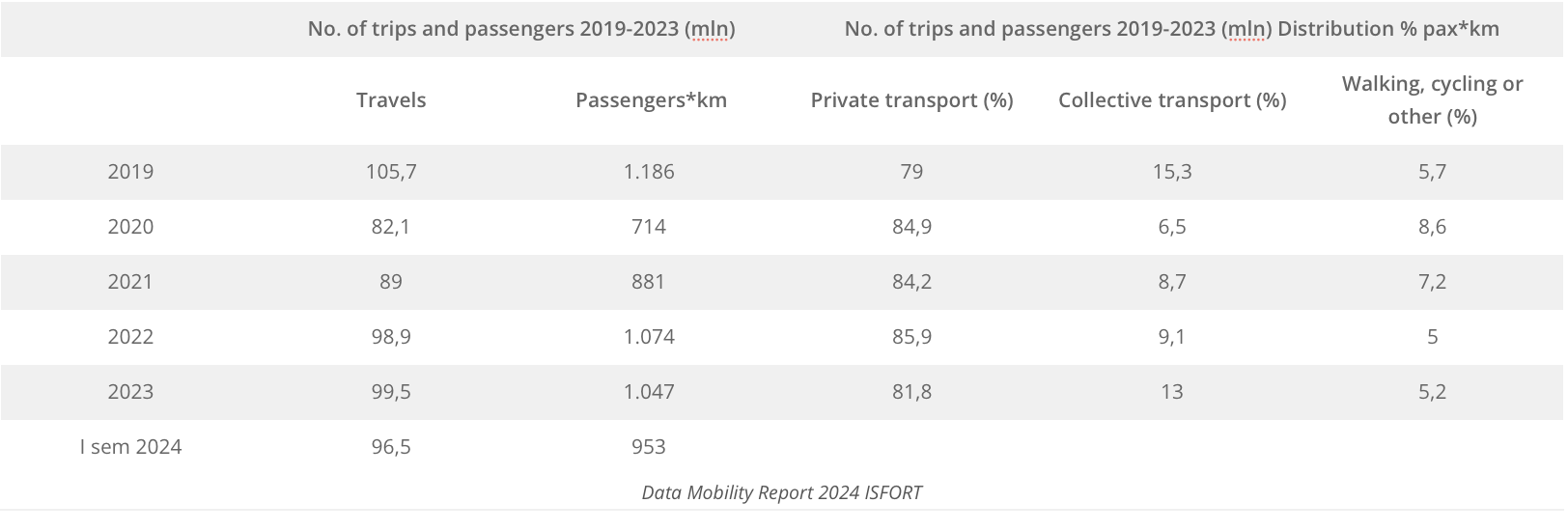
The National Recovery and Resilience Plan (PNRR) allocates EUR 23.8 billion to the infrastructure sector for sustainable mobility, with incentives for the renewal of the bus fleet, the construction of cycle paths and the development of metropolitan networks (source: Sustainable Mobility Report - Chamber of Deputies). Despite investments, the modal shift remains modest: in 2023, 81.8 per cent of journeys were made by private means, compared to 10 per cent by public transport and 5.2 per cent on foot or by bicycle.
Data Mobility Report 2024 ISFORT Private transport remains the main contributor to greenhouse gas emissions in the sector, while public transport is a key lever for reducing urban pollution, especially if it is made more efficient and attractive. In Italy, the transition to electric in public transport has been strongly supported by PNRR funding, which has given a significant impulse to the renewal of the vehicle fleet and the adoption of low-emission technologies. However, as these resources are progressively reduced or reallocated, a crucial phase is beginning: the ability to continue along the decarbonisation path will depend on the definition of new investment strategies and the soundness of long-term policies.
While the transition to electric in public transport is slow in Europe, elsewhere it is racing ahead. Find out in our in-depth article “The reasons for China's leadership in electric buses” how targeted policies, market scale and innovation have made a difference.