
The role of trade unions in the current shortage of drivers: the reduction in the performance of work to the detriment of the economic part
The shortage of bus drivers is becoming an issue of increasing concern in many cities and regions of italy. The reasons are attributable to many factors, first of all the wages that, in spite of the renewal of the Contract, the National public transport industry in general in recent years, it does not contribute to make this business attractive. In fact, the purchasing power of the drivers has been deteriorating due to the exponential increase in the cost of living.
But then the solution seems simple: to increase salaries. But this solution at the moment is not accessible for the majority of the local public transport companies. In fact, the cost of staff affects between 55% and 70% of the total cost of the budget and an increase in tout court wages without an appropriate increase in productivity would put at risk the sustainability of the financial statements and, in the last analysis, the sustainability of the service.
It is therefore necessary to analyze in detail what are the structural causes that have led to this situation to try and find viable solutions for a sustainable and economically to the local public transport companies.
To frame the problem, it must be said in general that in the course of the last few years, the comparison between the trade unions and companies TPL does not have the product in most cases, an effective efficiency in the management of the train staff, ultimately negatively affect the performance of work without producing substantial economic benefits for drivers.
The numbers
According to an estimate ANAV it would take approximately 15 thousand new drivers over the next three years.
Also, the average age is higher. According to the Ministry of Transport in Italy 45.8% of the drivers holders of CQC (Paper Qualification of the Driver, or the enabling of a guide for the transportation of goods or people on the road) it has more than 50 years, compared with 18.1% under the age of 40. Only 0.4% of them are under 24 years of age.
And yet, despite the peaks of the unemployed in the years after the economic crisis of 2008, the unemployment rate has not undergone significant changes over the last 20 years.
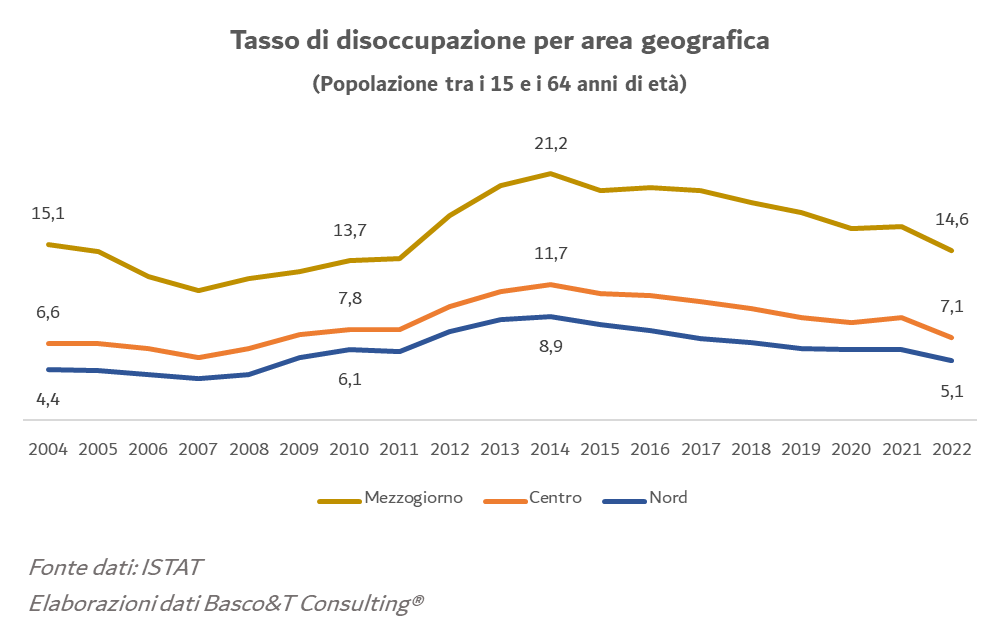
In the past, the south was a large basin of drivers, especially where the companies in the north of Italy drew.
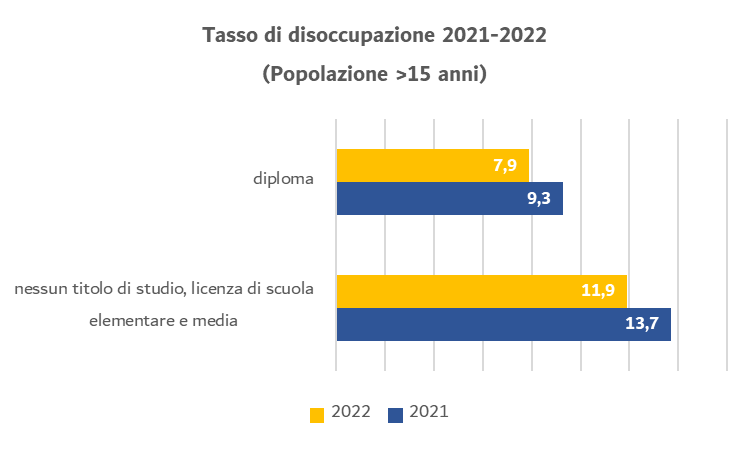
The unemployment rate graduates in Italy stood in 2022 7.9% having as reference the unemployed people between 15 and 64 years.
THE LOSS OF THE PURCHASING POWER OF THE DRIVERS
The salaries from the National Collective Agreement of the Work (July 2022) for a public transport operator with the function of the airbag (parameter 140) is equal to € 1.485 gross a month (about €1.150 net). The increase at each renewal, from 2009 were approximately 24-28€ gross (parameter 140).
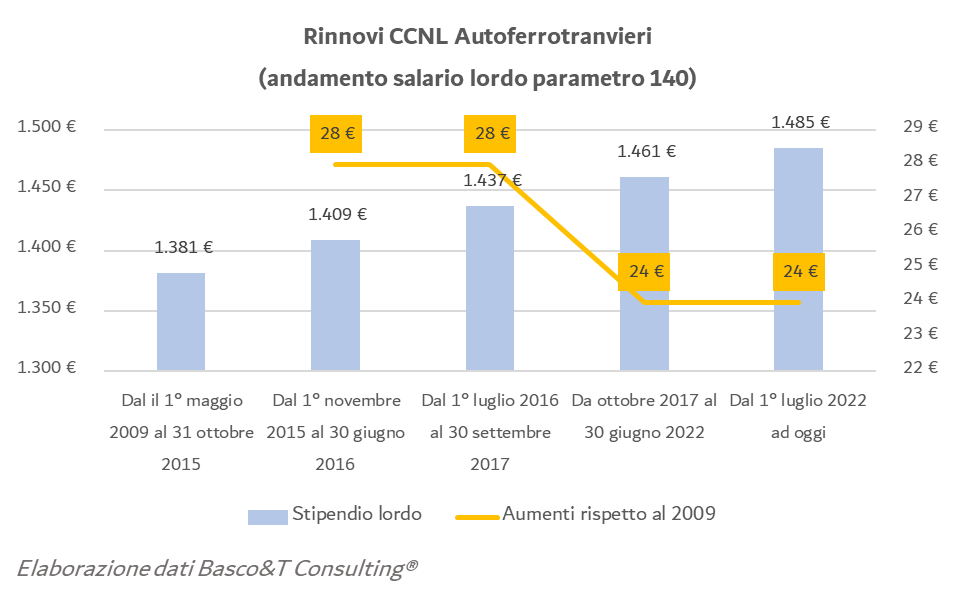
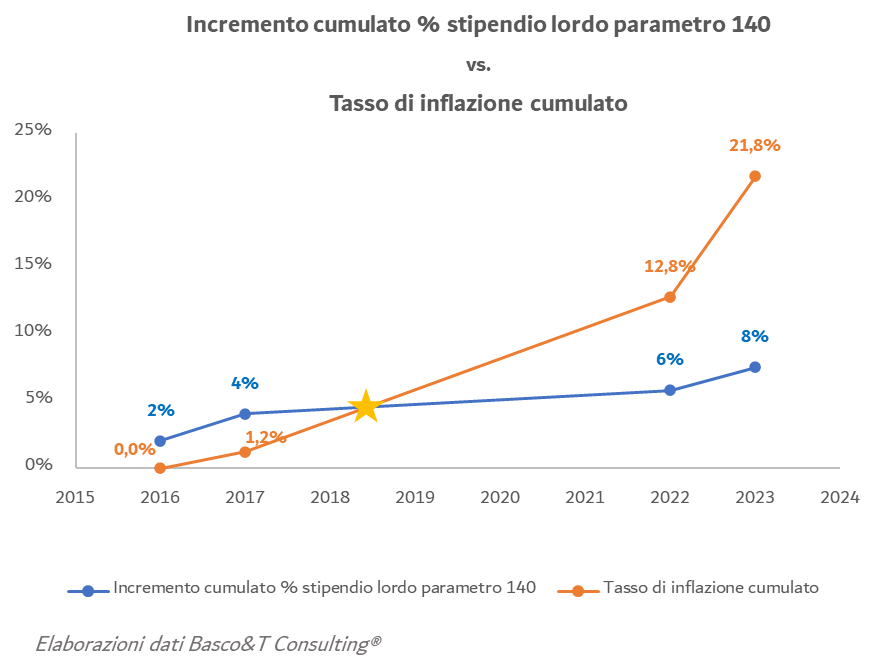
Despite the increases of the contract renewals of the national public transport industry in general, the purchasing power of the bus drivers, has gradually deteriorated due to the increase of inflation.
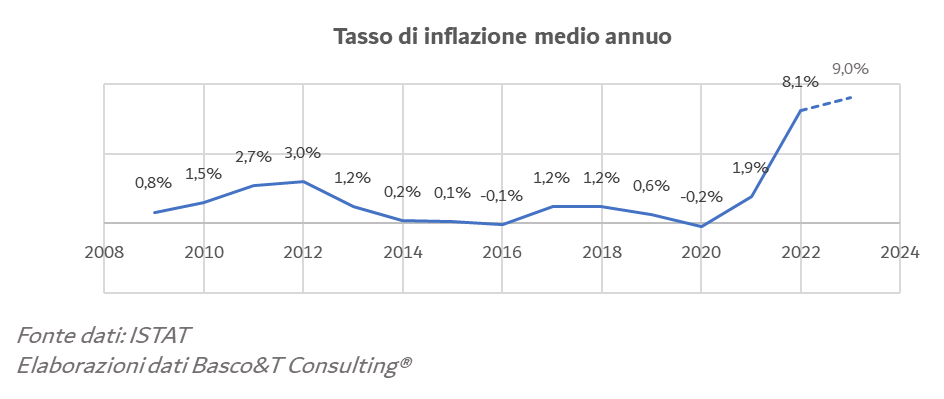
In fact, starting from 2018, the inflation rate is the aggregate exceeded the cumulative increase of the wage increases provided for by the contract renewals. This gap is strongly accented starting from 2022, with the exponential increase in the cost of living.
ON THE NET SALARY HE ALSO WEIGHS IN ON THE TAX WEDGE
The Oecd has released the report ‘Taxing wages 2022’ (referring to the year 2021) dedicated to the tax wedge, which emerge from differential existing between the 36 Countries that are part of the Organization.

Italy ranks among the top 5 positionsthis means that a worker standard (single/unmarried and without children) is subject to a tax wedge of the 46,5%.
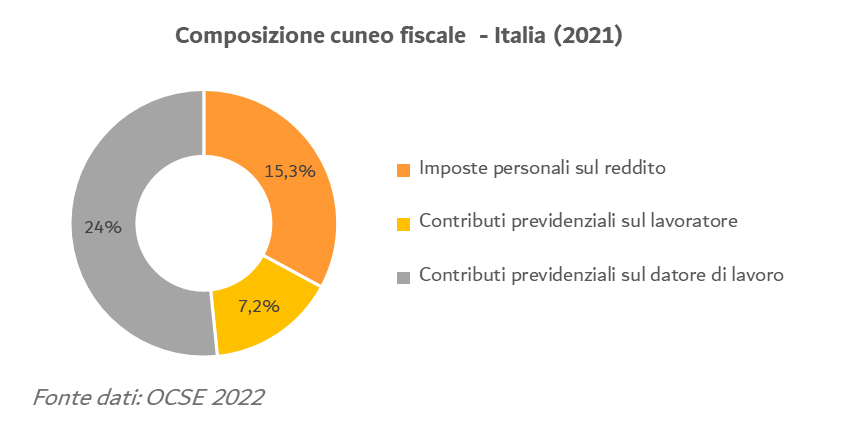
It should be emphasized that the cut in the tax wedge, expected in may 2023, in the order of 6% and 7%, depending on the income of the worker, should have a positive impact on the increase of the purchasing power of the bus drivers.
The extent of the cut in the tax wedge was announced with the approval of the FINAL 2023 and then confirmed by the Decree approved Work on the 1st of may.
THE CHORDS FOR THE 2ND LEVEL AND THE REDUCTION OF WORK PERFORMANCE
In the course of the last few years, the comparison between the trade unions and local public transport companies has been focused mainly on regulatory issues business of the second level in the majority of cases have not resulted in an actual increase in efficiency in the management of the train staff, ultimately negatively affect the performance of work without producing substantial economic benefits for drivers.
In particular, THE AGREEMENTS OF the 2nd LEVEL of "STIFFENED" THE CONSTRUCTION OF the WORK SHIFTS FOR THE local public transport COMPANIES, RESULTING IN EQUAL PERFORMANCE, AN INCREASE in THE COST OF the STAFF.
Hours of actual driving
In fact, if we look at the duration ofworking hours of train staffthat , according to the Agreement, the National public transport industry in general, is fixed in hours 6,40 daily or 40 hours per week, for the effect of supplemental agreements, which tend to "plastering" of the planning, the hours of the actual guide, in some cases, are reduced by 30%-40% by the actual performance 3.5-4.5 hours (hours of actual driving of the drivers).
In some cases, the "paradoxical" the daily schedule that fails to saturate the performance of the train staff for a few rounds, while in others, you must meet with the extraordinary.
Things are complicated further in the case of companies TPL result of the aggregation of multiple companies. In fact, the comparison of the Company, trade Unions are almost never produced an actual harmonisation of the legislation of the 2nd level, making the management of the train staff is not efficient.

Average number of days to the presence of the train staff
Also, by analyzing the average number of days to the presence of the train staff, which is an important indicator to evaluate the efficiency in the management of personnel, we arrive at the same conclusion. In fact, the national contract public transport industry in general provides for the crews about 270 days processing, i.e. the total days per year for which the train staff is available to perform the service. In reality the actual average of the drivers for some reality came around 210-230 days actually worked (pre-covid).
Also in this case, it must be said that the comparison between the Company and the trade Unions, in most of the times, it has not been focused to an increase in the concrete of the productivity of the crews, not being able to find even Performance bonus a useful tool to achieve these objectives.
Of course, in the view of the local public transport companies, there are also very virtuous.
THE CURRENT FINANCIAL STATEMENTS OF THE COMPANIES OF THE TPL ARE NOT ABLE TO SUPPORT INCREASES IN THE SALARIES OF THEIR DRIVERS WITHOUT A APPROPRIATE INCREASE OF EFFICIENCY OF WORK PERFORMANCE OF THE LATTER.

Many are the initiatives implemented by the local public transport companies to attract new drivers, such as:
• the establishment of Academy for the recruitment and the training of crews,
• the payment of the costs for obtaining the CQC,
• until the new tools of corporate welfare such as gyms business.
But the main aspect, remains the wage. It is necessary to make the wage of the driver, an attractive and dignified from the economic point of view.

It is therefore necessary to rethink the assumptions of the comparison between the Company and the Unions to ensure that it is more focused on the real needs of the workers (that is, an increase in wages) but without forgetting the needs of the balance of the financial statements of companies in the TPL.
In other words, it is necessary to focus the comparison ON the OPTIMIZATION OF the PERFORMANCE of WORK RELATED TO the IMPROVEMENT OF the SALARY of the drivers, stimulating the work of the team and allowing the distribution to employees of a portion of the economic returns generated by the efficiency gains. You could then pursue the interests of the drivers of a wage increase without, however, have a negative impact on the financial statements of companies in the TPL.
For more information and details please contact us at the address info@basco-t.com
Authors:
Managing Partner