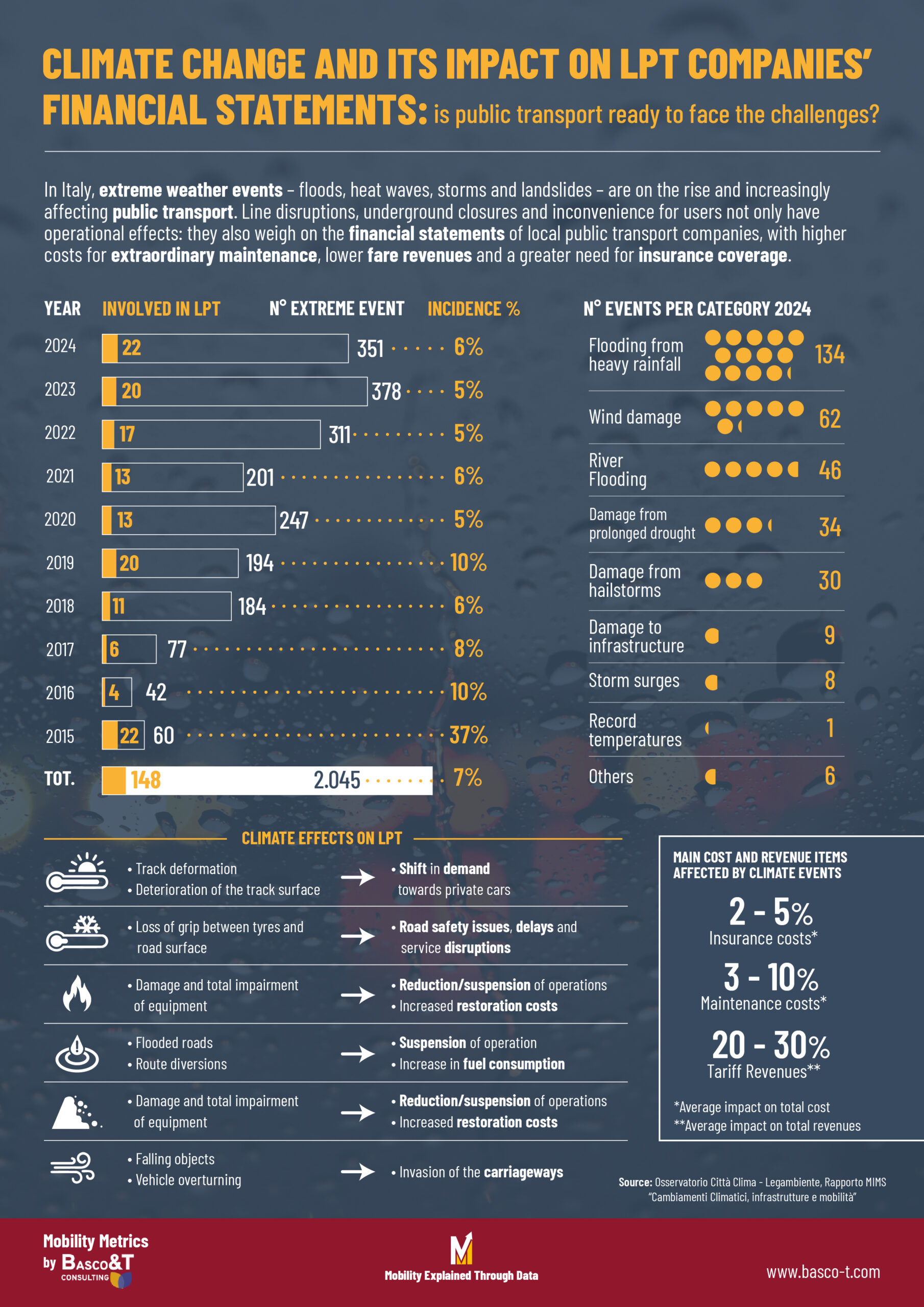
In Italy, extreme weather events – floods, heat waves, storms and landslides – are on the rise and increasingly affecting public transport. Line disruptions, underground closures and inconvenience for users not only have operational effects: they also weigh on the budgets of local public transport companies, with higher costs for extraordinary maintenance, lower fare revenues and a greater need for insurance coverage.
Share on:
In recent years, Italy has seen a significant increase in extreme weather events – floods, heat waves, wind storms, landslides – with increasingly evident effects on the country's economic and social fabric.
The public transport sector is among the most exposed: interrupted railway lines, underground stations closed due to flooding, buses blocked or diverted due to impassable roads have become recurring events. These phenomena not only cause inconvenience to users, but also have a direct impact on the budgets of transport companies, which face rising costs for repairs and extraordinary maintenance, reductions in fare revenues due to service interruptions and greater recourse to insurance coverage.
It is therefore essential to conduct an integrated analysis of the frequency and geographical distribution of extreme events, their effects on infrastructure and service provision, and the economic impact on operators in order to understand the scope of the problem and guide decisions on adaptation and resilience in the Italian public transport system.
CLIMATE EVENTS
The data was collected by Legambiente's Climate City Observatory and the report ‘Solutions and strategies for infrastructure investments in a context of climate change adaptation and greenhouse gas emission mitigation’ by the Ministry of Sustainable Infrastructure and Mobility.
Source: Legambiente
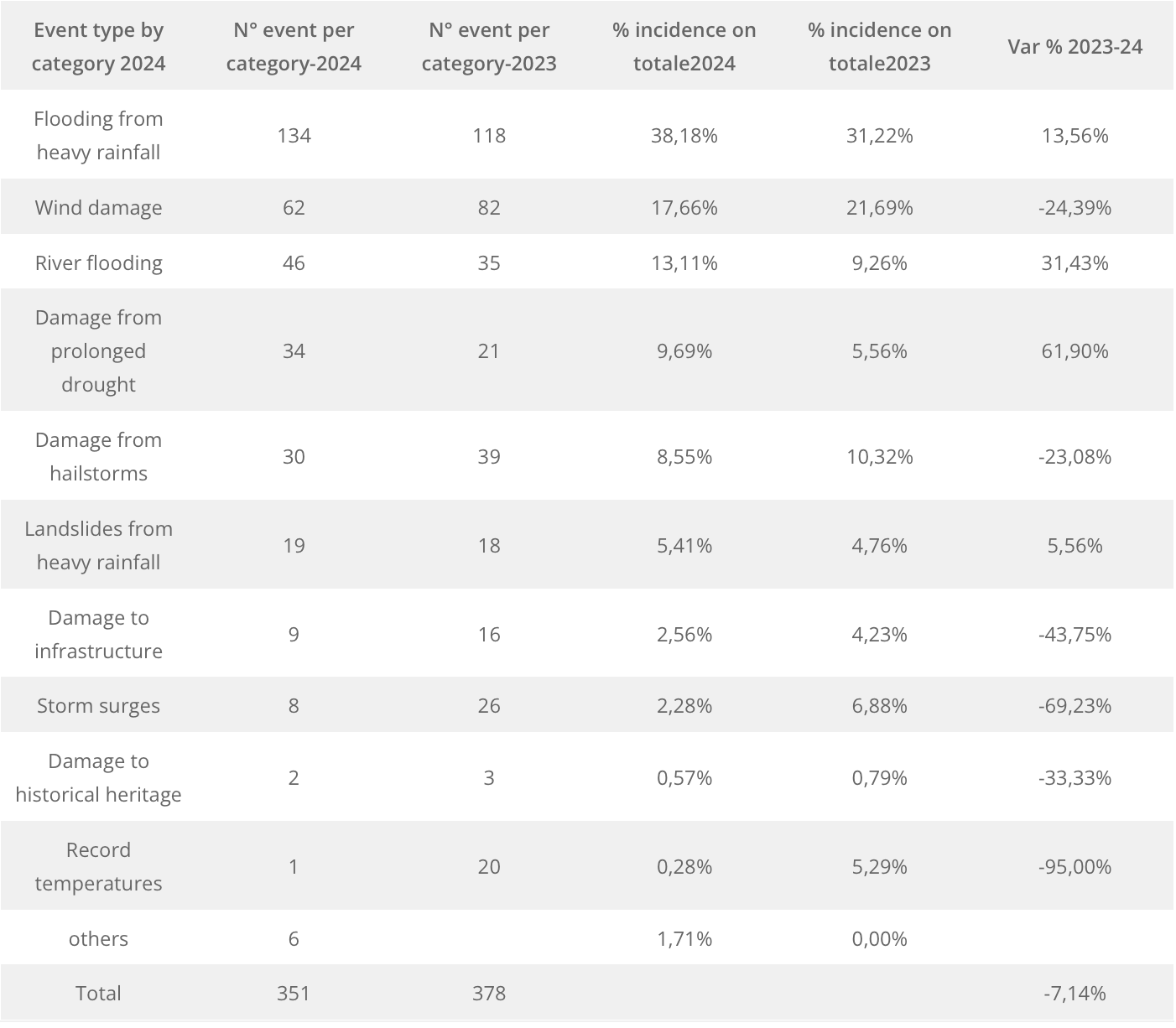
Source: Legambiente
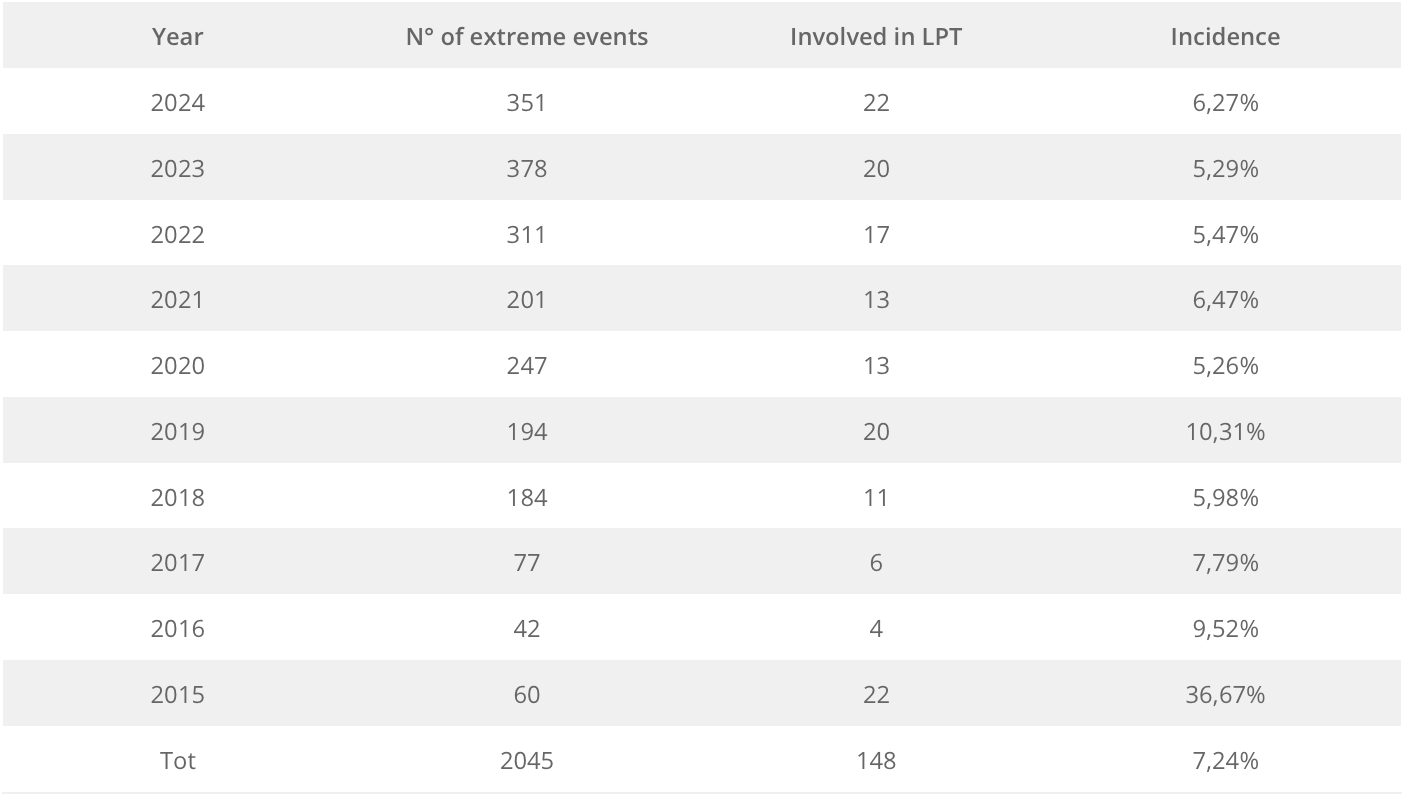
Between 2023 and 2024, the total number of events fell by 7%, from 378 in 2023 to 351 in 2024. Despite this, in 2024, extreme events involving public transport increased by 10% compared to 2023.
Not all categories followed the same trend:
- Flooding from heavy rainfall:up 13% compared to the previous year, confirming its status as the most frequent type (38% of the 2024 total).
- River flooding:third most frequent type in terms of incidence in 2024 (13%), up 31% compared to 2023.
- Damage from prolonged drought:the most marked increase, +62% compared to 2023, almost 10% of the total events in 2024.
On the contrary, other categories show sharp declines compared to the previous year:
- Record temperatures:-95%, from 20 cases in 2023 to only one case in 2024.
- Storm surges:-69%, down to 8 cases from 26 cases recorded in 2023.
- Damage to infrastructure:-43.75%, halved (from 16 to 9).
- Damage from wind and hailstorms:down 24% and 23% respectively compared to 2023.
In summary, in 2024 there was an increase in water-related phenomena (heavy rainfall, flooding) and drought, while those related to wind, hailstorms, storm surges and record temperatures decreased. This polarisation suggests that climate risk is not decreasing, but is shifting towards increasingly concentrated and intense events, with very strong impacts on local public transport and infrastructure management.
THE EFFECTS OF CLIMATE EVENTS ON PUBLIC TRANSPORT
Local public transport (LPT) in Italy is multi-modal by nature: it integrates buses, trams, metros and other means of transport that simultaneously use roads, tracks, bridges, tunnels, stations, terminals and depots. This system involves the use of very different infrastructures – above ground, elevated or underground – and support services such as electricity networks, fuel supplies, rainwater disposal and digital networks for service management.
This combination of different elements makes public transport particularly vulnerable to extreme weather events. An intense weather event can simultaneously affect multiple infrastructures, causing damage and disruption that reverberates throughout the entire urban network and affects passengers, with both economic and social consequences.
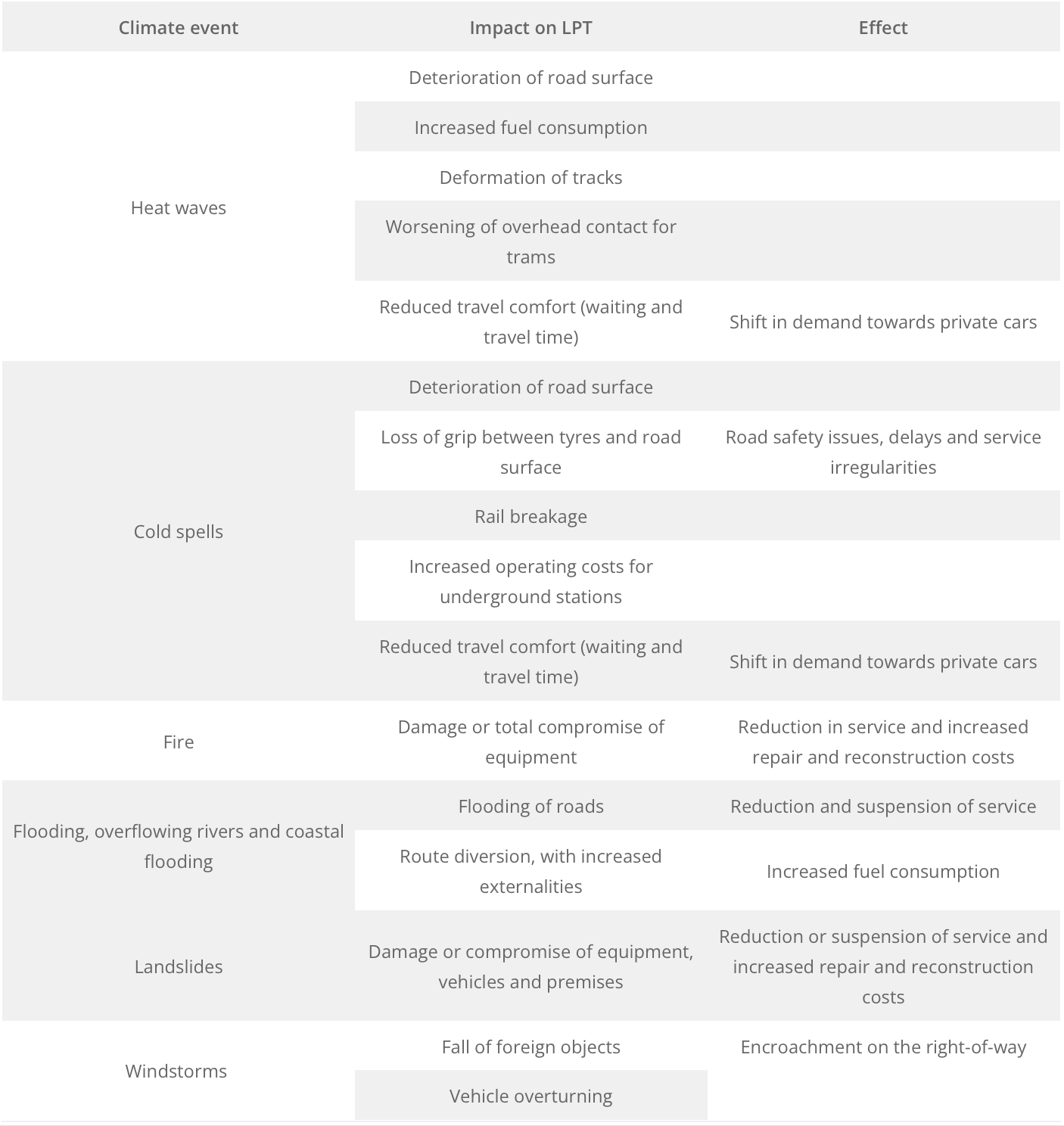
Source: MIMS
The effects vary depending on the climatic phenomenon:
Heat Waves::
- asphalt softens and deforms, thus increasing maintenance costs;
- in concrete floors, expansion creates cracks;
- rubber-tyred vehicles consume more fuel, also due to the intensive use of air conditioning.
- Trams and metros risk breakdowns or deformation of tracks and overhead lines, resulting in longer waiting times for passengers who suffer in stops with little shade and overheated vehicles, with the risk of them switching to private cars.
Cold Spells:
- low temperatures cause asphalt to contract and crack;
- ice and snow reduce tyre grip on the road surface, causing vehicle safety issues, delays and service irregularities;
- The presence of snow and ice increases removal costs and the energy required for on-board heating. Here too, passengers may prefer private cars for greater comfort, diverting demand.
- Rail breakage
Fires:
- rare but highly destructive events that can damage and/or compromise equipment, vehicles, depots and infrastructure – especially underground – with high restoration costs and reduced operations.
Flooding, overflowing rivers and coastal flooding:
- these often do not cause irreparable damage to structures, but they do cause disruption to services, requiring evacuations and emergency interventions, especially in underground environments. Poor maintenance of drains and manholes can exacerbate the impact.
- Route diversion causing increased consumption.
Landslides:
- rare in urban areas, but when they occur they cause serious structural damage to roads and infrastructure, with high repair costs and service reductions.
Windstorms:
- they can knock down trees, poles and street furniture, obstructing traffic routes and blocking circulation. Consequently, rapid intervention is required for removal.
- Vehicle overturning
In summary, extreme weather events cause physical damage to infrastructure, which in most cases leads to service disruptions (decreased fare revenue) and additional maintenance costs, while also reducing passenger comfort. All this has negative effects not only on demand for public transport, but also on environmental and social externalities, because more people are likely to return to private cars, increasing traffic and emissions.
THE EFFECTS OF CLIMATE EVENTS ON FINANCIAL STATEMENT DATA
This issue is also significant from an economic perspective, as damage to infrastructure and mobility caused by climate change is among the most serious. According to a report* by MIMS, projections estimate an economic impact of around €5 billion per year by 2050, which is up to 12 times higher than current damage levels.
The incremento della frequenza e dell’intensità degli eventi climatici estremi – piogge intense, esondazioni fluviali, ondate di calore e tempeste – produce effetti sempre più marcati sul trasporto pubblico locale. Oltre ai danni diretti a strade, binari, gallerie, fermate e depositi, tali fenomeni possono determinare un aumento significativo dei costi di manutenzione e delle coperture assicurative. Mediamente, le spese assicurative incidono tra il 2% e il 5% dei costi di produzione, mentre la manutenzione pesa per il 3%–10%.
Service interruptions due to such events also result in a reduction in fare revenue, which accounts for approximately 20%–30% of production value, with a significant impact on overall turnover.
In conclusion, the increasing frequency and intensity of climatic events not only compromises the operational continuity of local public transport, but may also put pressure on the long-term economic sustainability of companies in the sector.