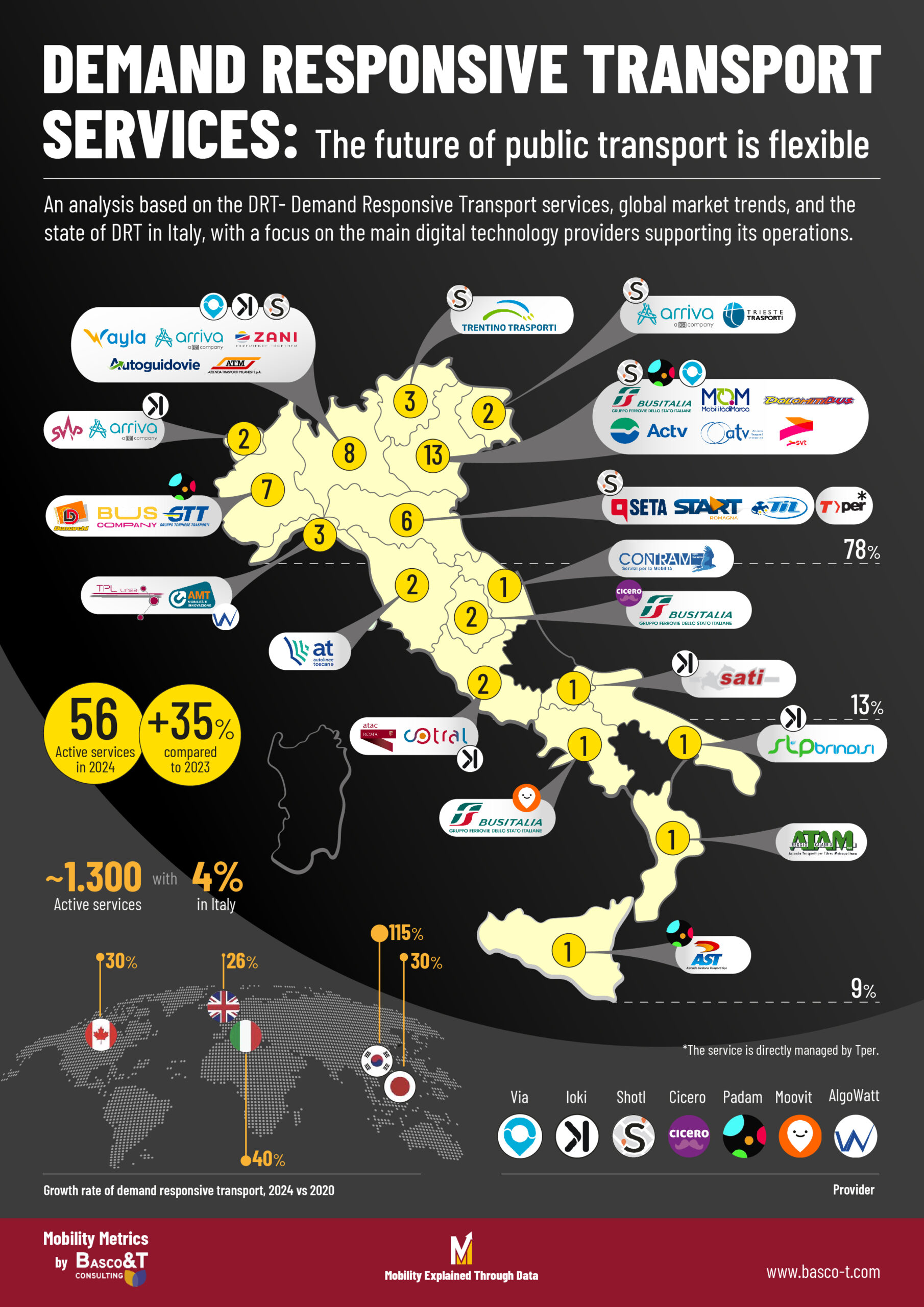
An analysis based on the DRT- Demand Responsive Transport services, global market trends, and the state of DRT in Italy, with a focus on the main digital technology providers supporting its operations.
L’analisi è basata sul “9° Rapporto Nazionale sulla Sharing Mobility” della Fondazione per lo Sviluppo Sostenibile, promosso dal MASE e dal MIT, che ha raccolto le informazioni esclusivamente tramite un questionario inviato agli operatori delle piattaforme digitali (IOKI, Padam, Shotl, VIA). Il dataset è stato costruito integrando i dati del report con le informazioni ufficiali sui servizi pubblicate dagli operatori.
Share on:
The Demand Responsive Transport (DRT), or on-call transport, is a mobility service is flexible and suitable routes and schedules according to the demand of the users, differing from the traditional services of a line fixed time is used mainly in low-density areas or in times demand reduced.
The evolution of on-call transport has its roots in the ‘70s, with the first european experiments inspired by us models. In Italy, the first pilot project began in 1987, with the introduction of a supplementary service in the Val Nure, in the province of Piacenza, to support the areas to weak demand. In the ‘90s, the on-call transport has continued to spread in Europe bridging the inefficiencies of the traditional transport, both urban and suburban, with pilot projects in Finland and in Italy.
The services sector to the call has registered a significant expansion in 2024, with more than 390 new projects launched at the global level. According to the latest market report “On-Demand Transit 2024”, the total number of services that have been introduced since 2012, has surpassed 2,000, with more than 1,300 are currently active. However, while some regions have registered a strong momentum, others have suffered a setback.
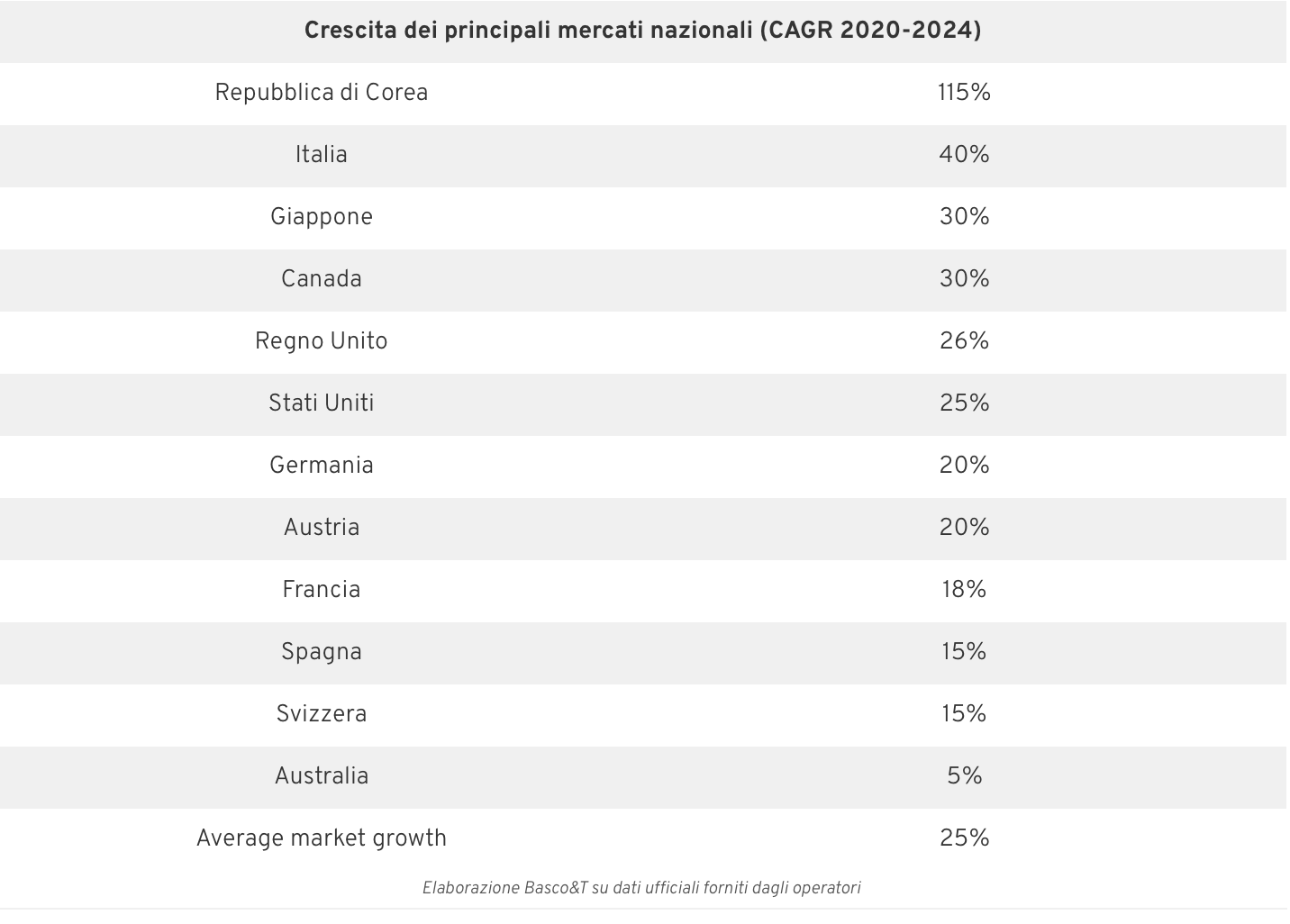
A great growth was recorded in eastern Asia, with South Korea, for a total of nearly 50 new projects in 2024. Japan has reached more than 50 launches in the fourth quarter alone, with a net growth of the market, with the launch of new projects less closing projects) was 60 units. The United States has maintained a steady rate in 2024, with the launch of about 120 new projects. In Europe, the sector of the DRT has suffered a hard blow in 2024. While the total number of new services stood still at about 100, the net growth has halved compared to 2023, passing just +30 units. It is particularly important to the collapse of Germany, one of the precursors, and a time of growth engine of the global market. The main reason for this negative trend is linked to the interruption of european grants, federal and state.
In 2024, the number of projects Demand Responsive Transport (DRT) in Italia ha raggiunto quota 56, registrando un incremento del 35% rispetto al 2023 e una crescita di oltre il doppio rispetto al 2022, anno in cui erano attivi 23 progetti.
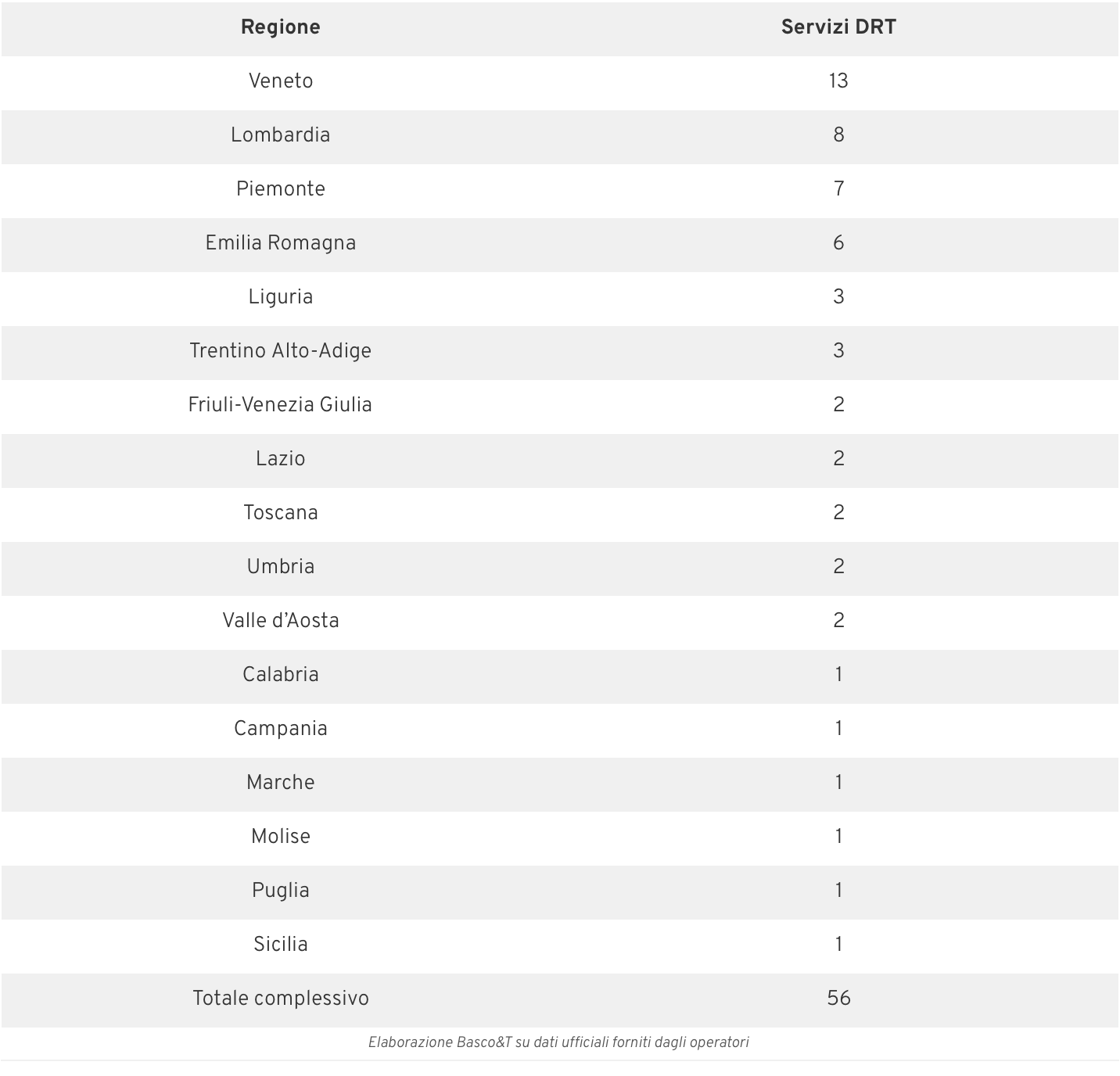
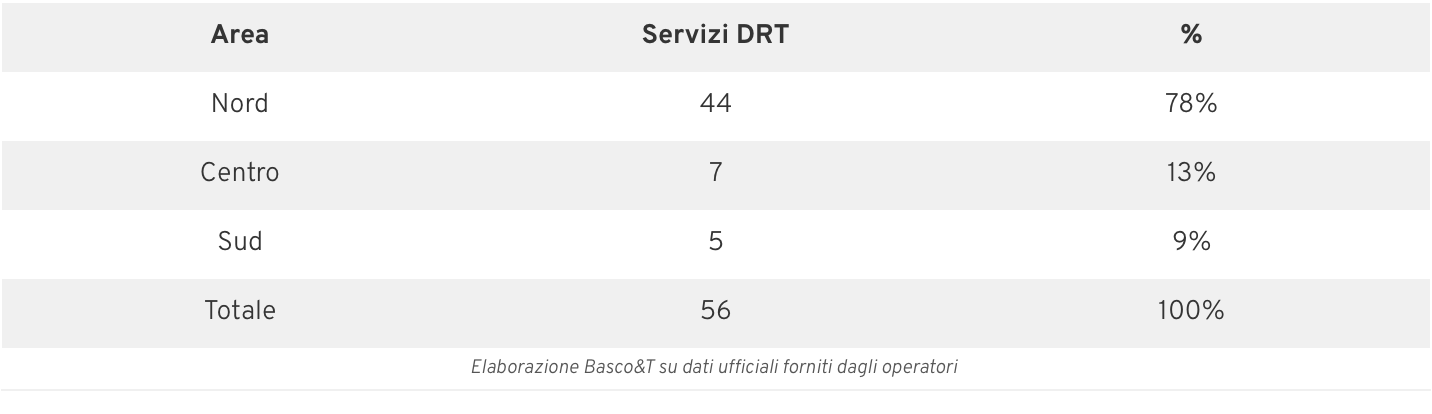
The spatial distribution shows a clear concentration in the North of Italy, that is home to the 78% of the projects. The Veneto it is the region with the highest number of active initiatives (13 lines of service), followed by Lombardy (8) and Piemonte (7). Among the top twenty public transport companies in Italy, 14 of which offer services for DRT, with Busitalia Veneto in my head for a number of services, (5 projects).
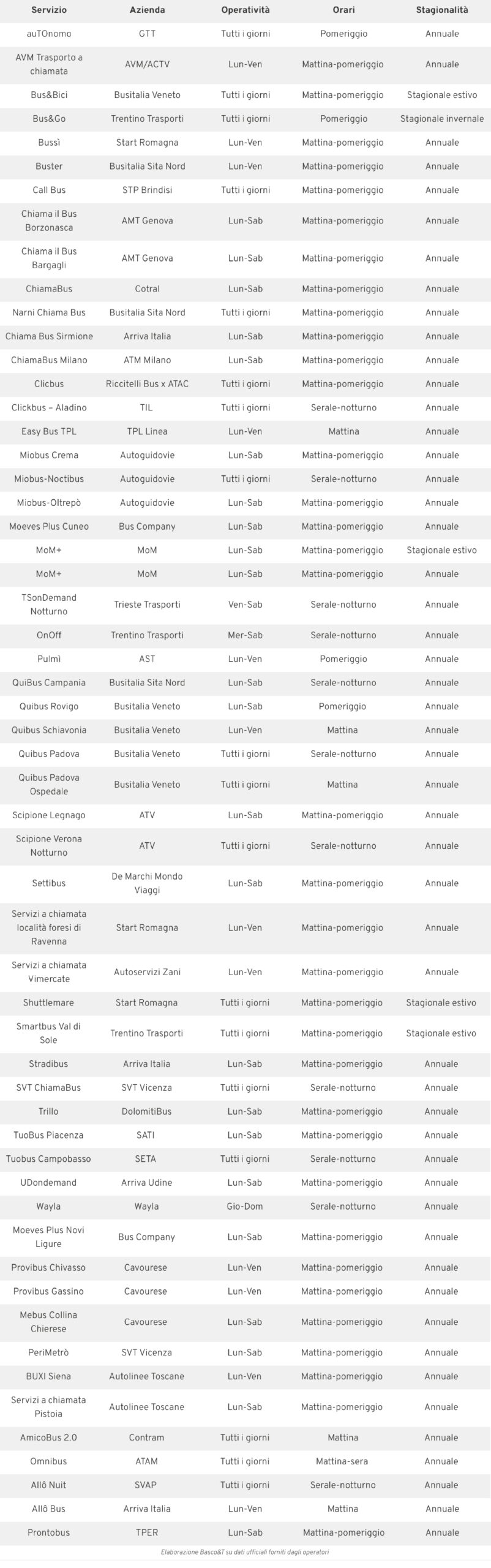
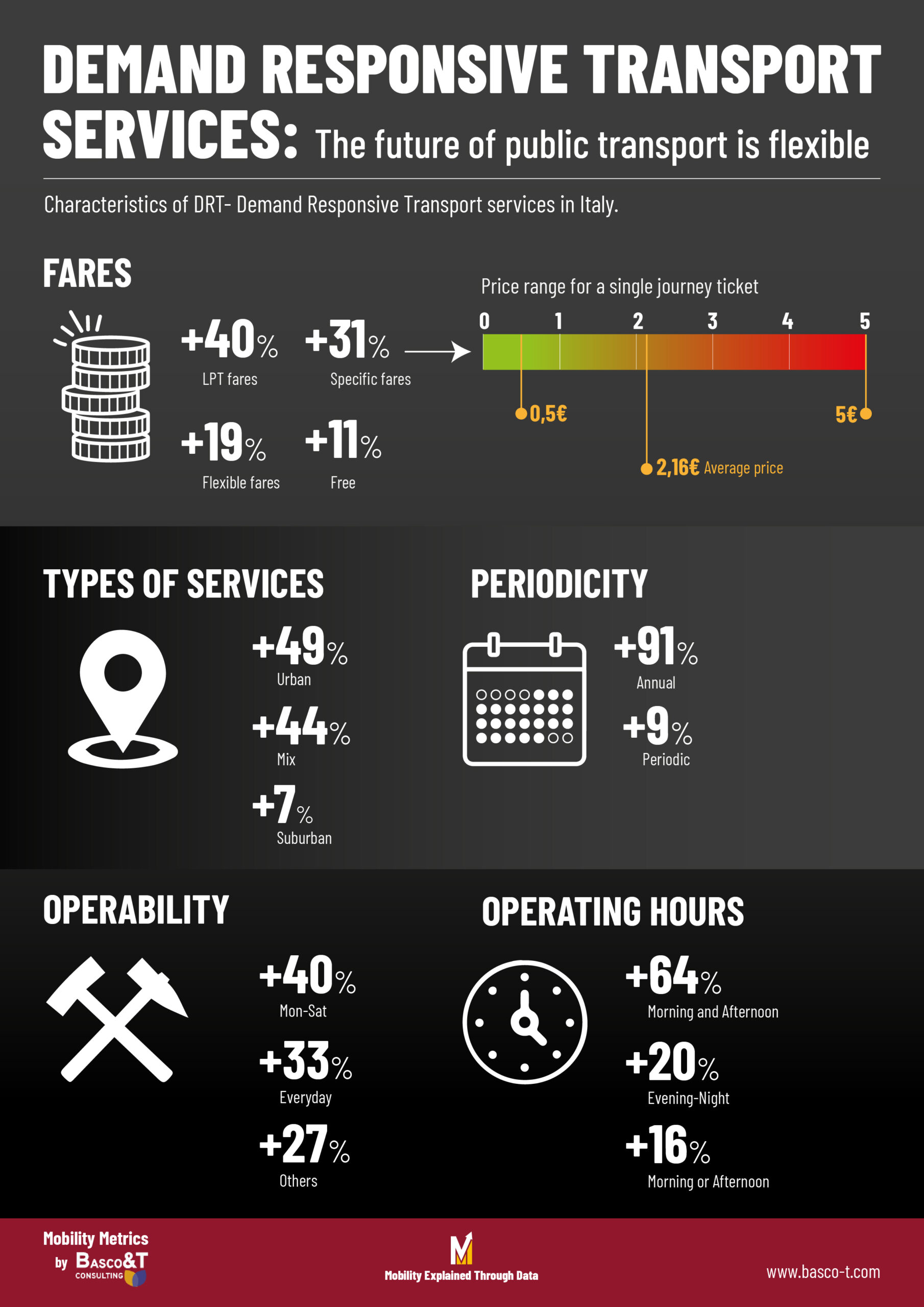
The seasonality of the projects DRT is predominantly annual (91%), with operations primarily from Monday to Saturday (40%) and a flexible management of the business in bands default. 64% of the services is operating in both the morning and the afternoon, the 20% warrant coverage in bands in the evening/night, the remaining is divided between services only in the morning or in the afternoon.
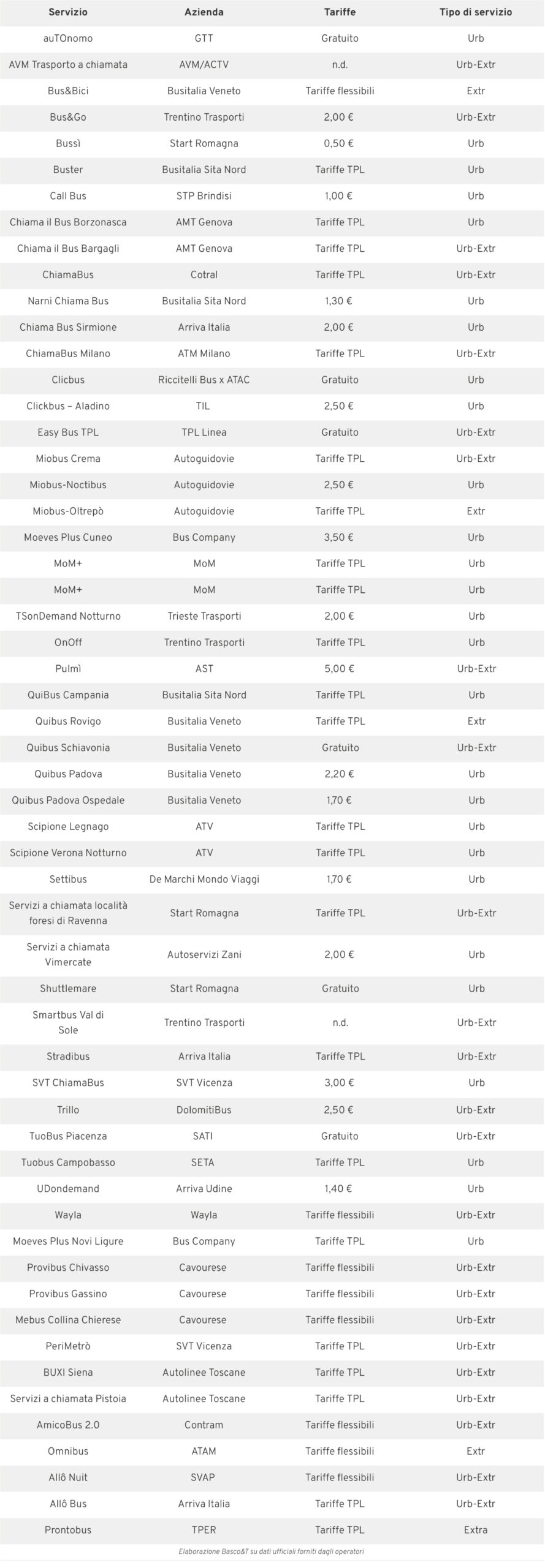
From the point of view of the tariff, in 40% of cases are applied to the standard rates of the local public transport service. 31% of the projects use specific rates, with an average price of €2,16, while 11% of the services is free of charge. The remainder of the expected rates are flexible, adaptable according to the specific needs of the service.
With regard to the type of service for 49% of the projects covers the urban areas, 44% of the service provides a mixed urban and suburban and the remaining 7% exclusive suburban.
The Demand Responsive Transport (DRT) is a strategic solution to improve mobility, especially in the areas of weak demand and in urban contexts with a limited coverage of traditional public transport. To maximize effectiveness, it is essential to improve the management of data, planning of routes and the fare integration, as they demonstrate the best practices adopted in Austria, Germany and Hungary, where the DRT is well structured and harmonised with the existing public transport.
The economic sustainability of the services to call in the TPL remains a crucial challenge, you cannot rely exclusively on the revenues, but must be evaluated in terms of the “cost of business”. Without subsidies, in fact, these services are sustainable only if replace the line, because their economic equilibrium is measured by the savings per kilometre got to the parity of users served.
The success of the services in the call depends on the balance between demand, operational efficiency and financial sustainability. To ensure stable growth and long-lasting, it is essential to take pricing models, appropriate, integrate them with traditional and ensure the support of private and public funding, so that they become a structural component of the mobility of the future.
Notes:
*Were considered to be in the services of the active call to the 31/12/2024
** It does not include the transport services for people with disabilities