
How to overcome regional disparities
Criteria for distribution of the Fund of the National Transport
The The National fund for Transport (FNT), is a funding mechanism established in 2011 by the Italian government in the framework of the process of fiscal federalism, which aims to support the local public transport on rubber and iron, representing a strategic resource for the TPL.
Allocation and distribution of the Fund of the National Transport (FNT) in 2023
In 2023the FNT has reached a included overall 5,054 billion, distributed following a system mixed that combines the the historicity of the funding with criteria of performance related to standard costs.
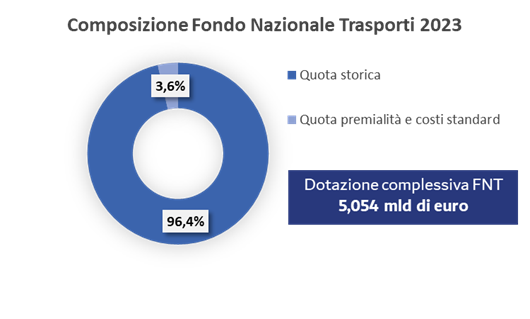
The allocation of the National Transport occurs through two main components:
Historical share (96,4%): calculated on the basis of the assignments of historical regions, holds account of parameters such as: population served, lto public transport demandthe extent and complexity of the LPT system regional.
Share premium (3,6%): this component is intended to reward the regions to demonstrate a improvement in the management of public transport. The criteria for the award includeefficiency of services, the sustainability environmental and the increase in user. However, this share is a reward, in view of the incidence on the total of the allocated resources, has a limited impact.
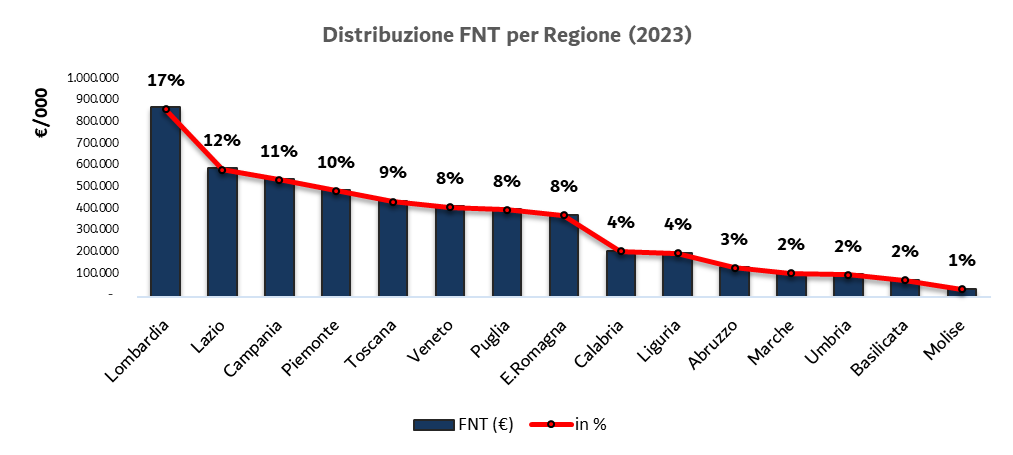
The system of breakdown current highlights transition incomplete towards a model-based remuneration is based on quality and efficiency. The predominance of the component historical favors the regions traditionally most financedwhile the introduction of standard costs, although representative of the initial step, has an impact still marginal to the overall equilibrium of the distribution. According to this criterion of distribution, Lombardia (17,4%), Lazio (11.7%), and Campania (11,1%) are the regions that receive highest odds of the fund.
Taking into consideration the only distribution for share rewards systemregions , such as Campania, Piedmont, Lombardia and Calabria appear penalizedwith a share of the reward less than the weight of their historical share.
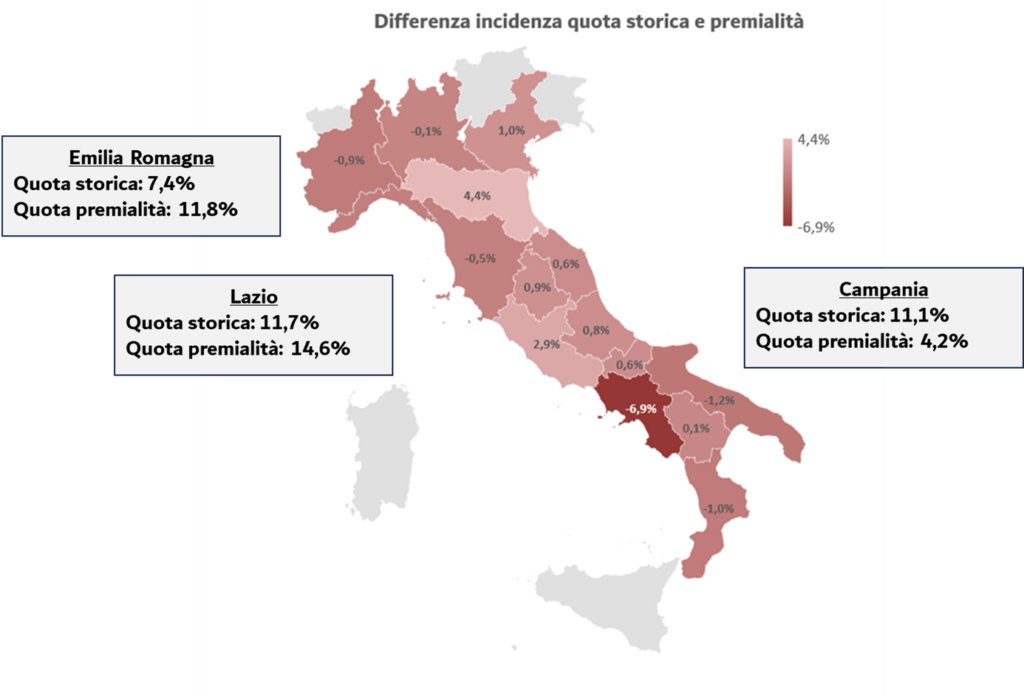
The Campaniawith a historical share of 11.1%, sees a reward reduced to 4.2%, the equivalent of about €7.5 million, highlighting a deficit significant (-6,9%). Regions such as the Lazio and Emilia–Romagna show opposite trend. The Emilia-Romagna region, for example, switch from a historical share of 7.4% at a premium of 11.8% (approximately €21 million) with a positive balance of +4,4%.
The demographic dynamics and the new spatial demands
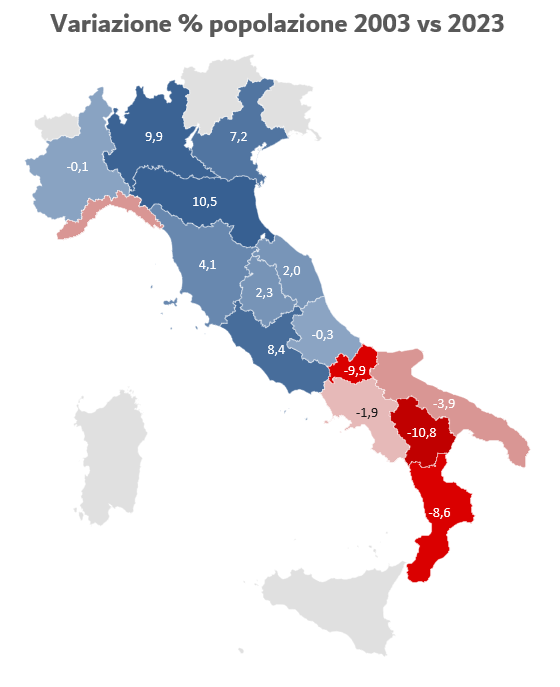
Considering also the demographic trendthe variation of the population that occurred between 2003 and 2023 affect significantly on the needs of the planning and financing of the TPL. Regions in population growthas Emilia-Romagna (+10%) and Veneto (+7%), and experience a increase of question public transport requiring more investments to adapt the infrastructure and the services.
On the contrary, the regions in the decrease in the populationas Molise (-2%) and Calabria (-8,6%), while presenting theoretically, a lower demand, still need services to a minimum to ensure the mobility. These trends highlight the need for a system that is more flexible and attentive to the territorial transformations.
Limitations and disparities in the distribution system
According to the analysis of the distribution of the National Fund for Transport (FNT) per inhabitant between the various regions, emerge as significant disparities in the fund per capita.
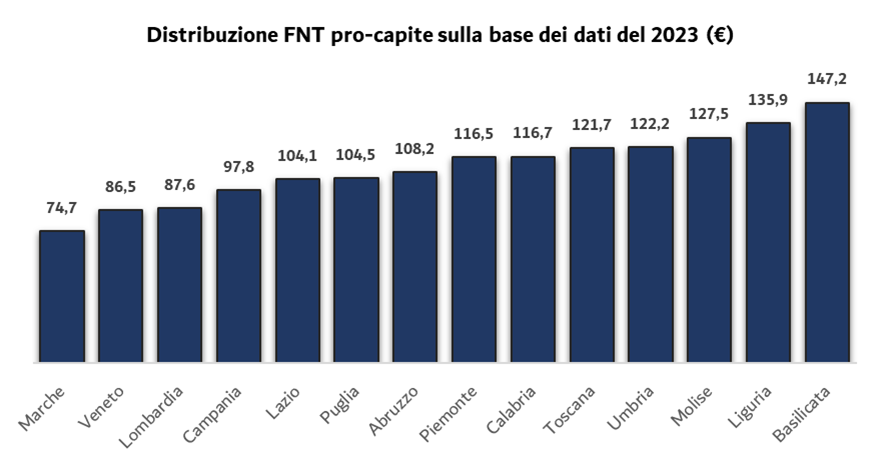
The Basilicata (Eur 147.2 €), the Liguria (135,9 €) and the Molise (127,5 €) are the regions with the the fund's per capita more high. This is mainly due to their reduced population compared to the total amount of funds received, generating values per capita above average.
On the contrary, in the regions the most densely populated how to Lombardy and Campania, the impact of the resources received is diluted the greater demand for public transport. This can lead to an underestimation of the needs of these areas in terms of adequate funding.
These data reflect a structural trend in which regions less populated receive a quantity of funds that not is necessarily proportional to population density or transport demand.
Also, the Constitutional Court highlights the criticality of a model to update
The The Constitutional Court, with the judgment no. 133 (9 may-18 July 2023he highlighted the need of complete the regulatory path started with the law of n. 42/2009, aimed at the transition towards a system funding based on costs and levels of service-standard to ensure a fair distribution of the resources and services of uniform quality throughout the national territory.
Future prospects
The The National Fund For Transport is a key element for the support of local public transport (LPT), however its current distribution shows criticality related to the mode of allocation of resources. The stability offered by the division of historical and incentives related to performance are central aspects, but it is evident the the need to adapt the system to the new challenges and the needs of the community.
To improve the effectiveness and equity of the Fund, it may be useful to consider a more dynamic approach taking into account the demographic changes and specific local needs. It is essential, to this end, use criteria distribution constantly updatedthat ensure a more transparency in the parameters that regulate the allocation of the share of the rewards.
A reflection in this direction would help to ensure a system of mobility that is more balanced and sustainable development at the national level.