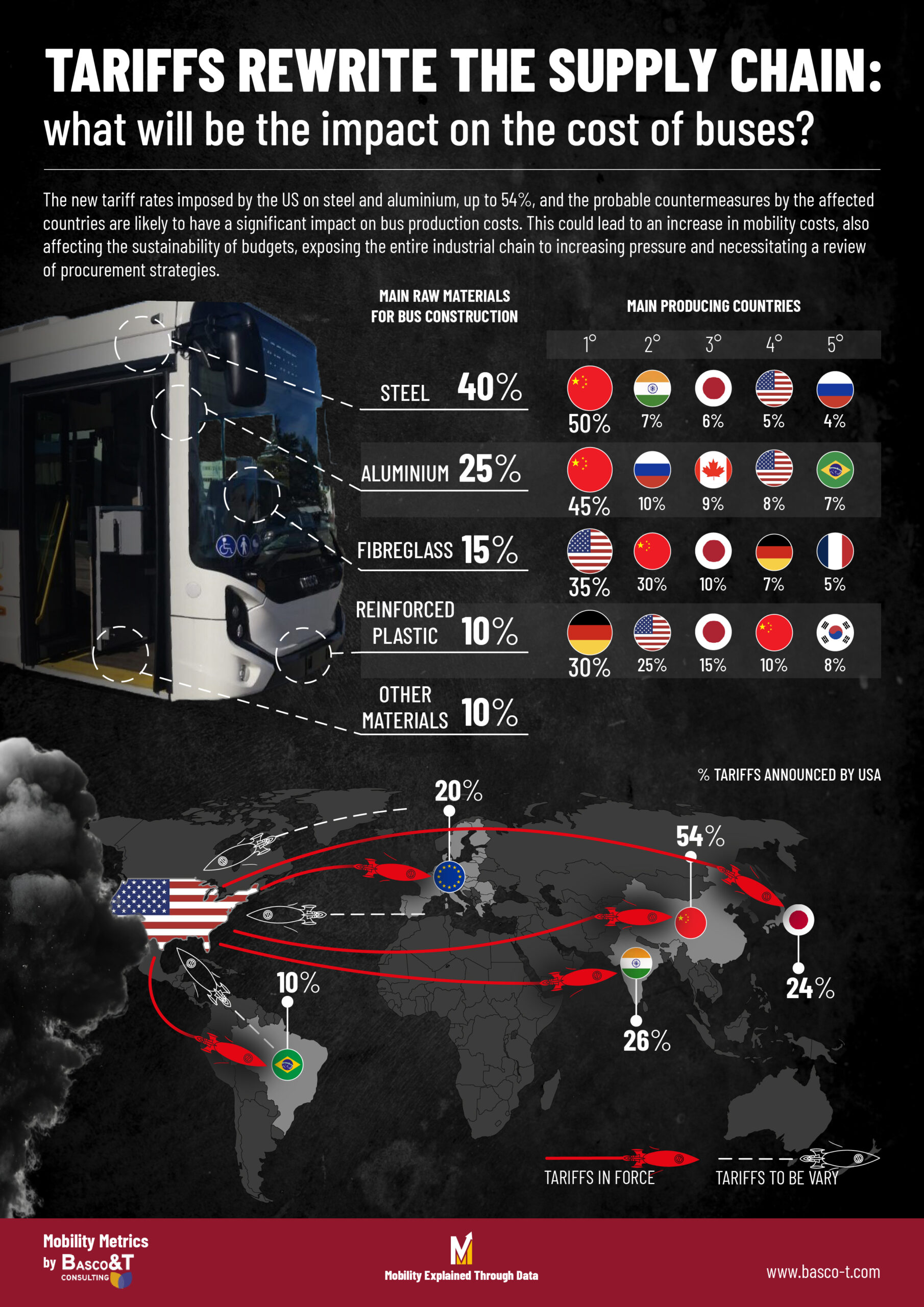
The new tariff rates imposed by the US on steel and aluminium, up to 54%, and the probable countermeasures by the affected countries are likely to have a significant impact on bus production costs. This could lead to an increase in mobility costs, also affecting the sustainability of budgets, exposing the entire industrial chain to increasing pressure and necessitating a review of procurement strategies.
Share on:
The Trump administration announced a new set of tariffs on steel and aluminium imports, which came into force on 5 April. According to the calculation mechanism adopted by the White House, the duty percentages were determined as half of the trade deficit between the US and various countries, calculated on the value of total imports.
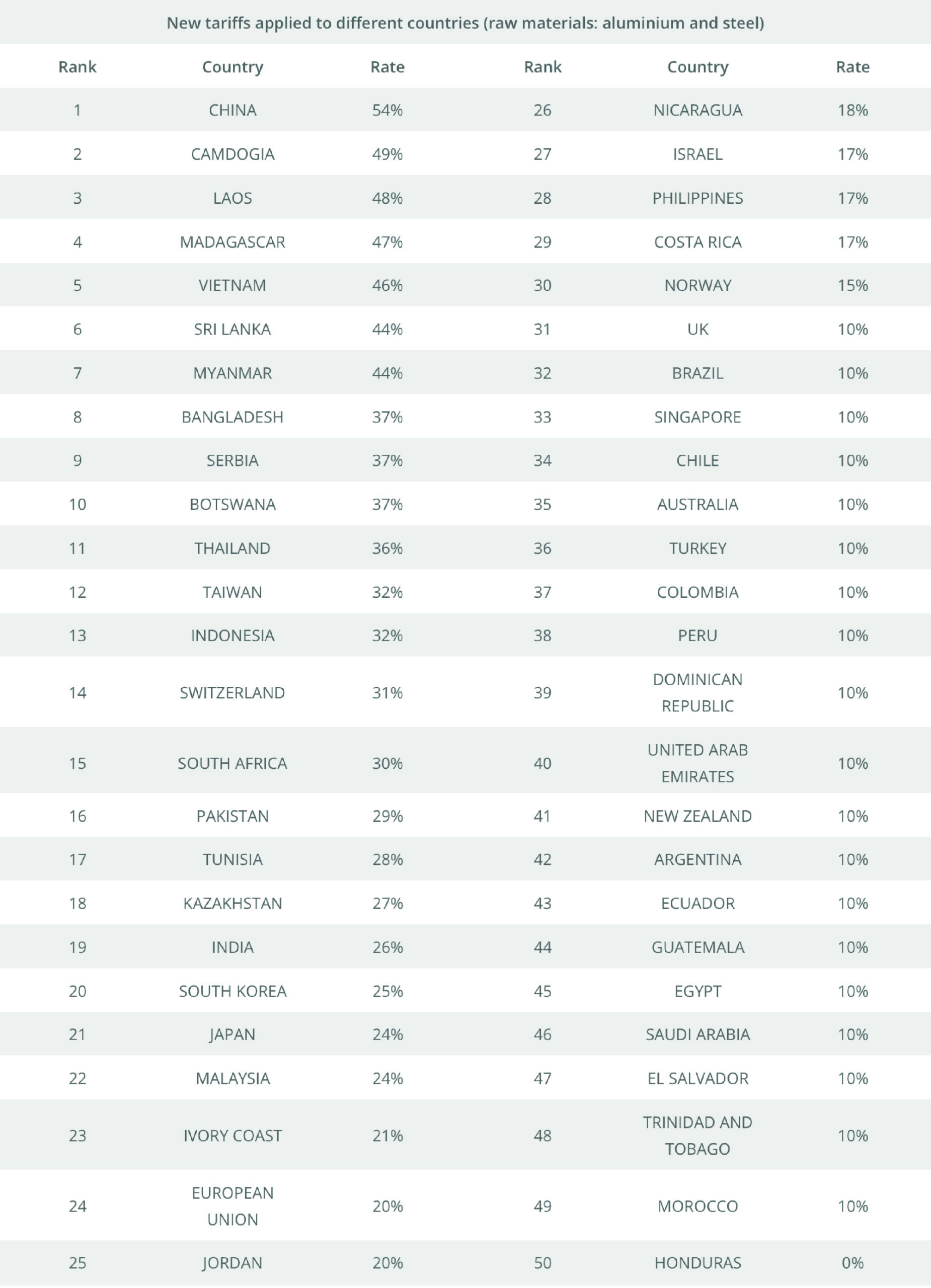
Tariffs varied considerably depending on the country of origin. The highest duty was imposed on China (54%), followed by Cambodia (49%), Laos (48%), Madagascar (47%), Vietnam (46%), Sri Lanka and Myanmar (44%). High duties are then observed for:
- Thailand (36%),
- Serbia and Botswana (37%),
- India (26%),
- South korea (25%), and
- Japan (24%).
A large number of countries will receive a uniform 10% duty, including the United Kingdom (UK), Brazil, Singapore, Chile, Australia, Turkey, Colombia, Peru, Dominican Republic, United Arab Emirates, New Zealand, Argentina, Ecuador, Guatemala, Egypt, Saudi Arabia, El Salvador, Trinidad and Tobago, and Morocco.
Honduras is the only country with no duties (0%).
Data TodayMondo
Separately, the automotive sector is affected by a fixed 25% tariff on all foreign vehicle imports, with specific effects on major exporters such as Japan, South Korea and the European Union.
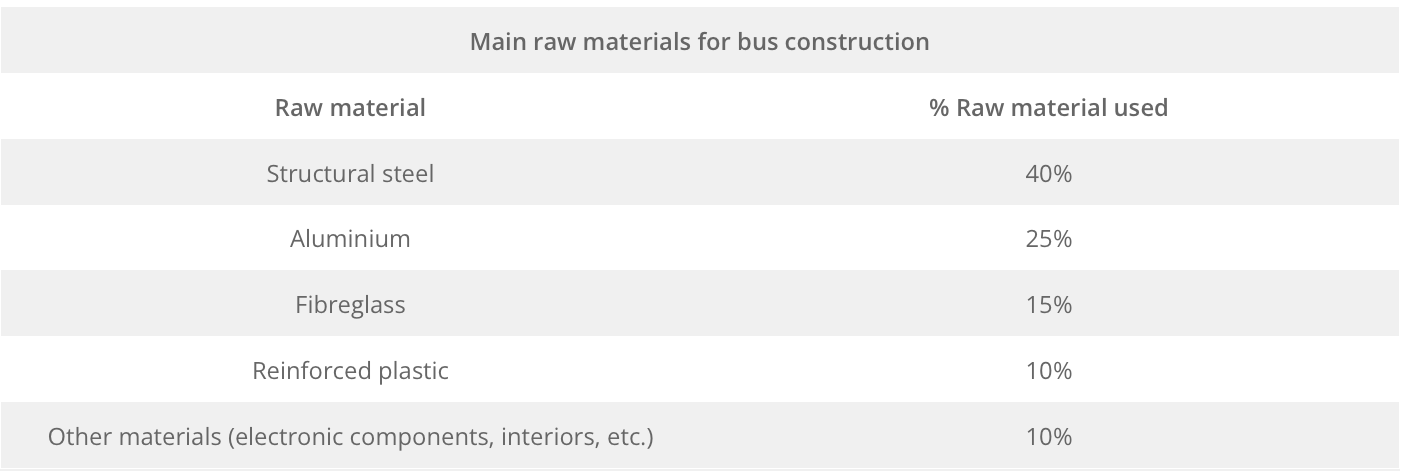
These tariff measures have potential direct effects on the bus production chain, whose material composition is largely based on steel and aluminium. In fact, the structure of a bus consists of 40% structural steel and 25% aluminium.
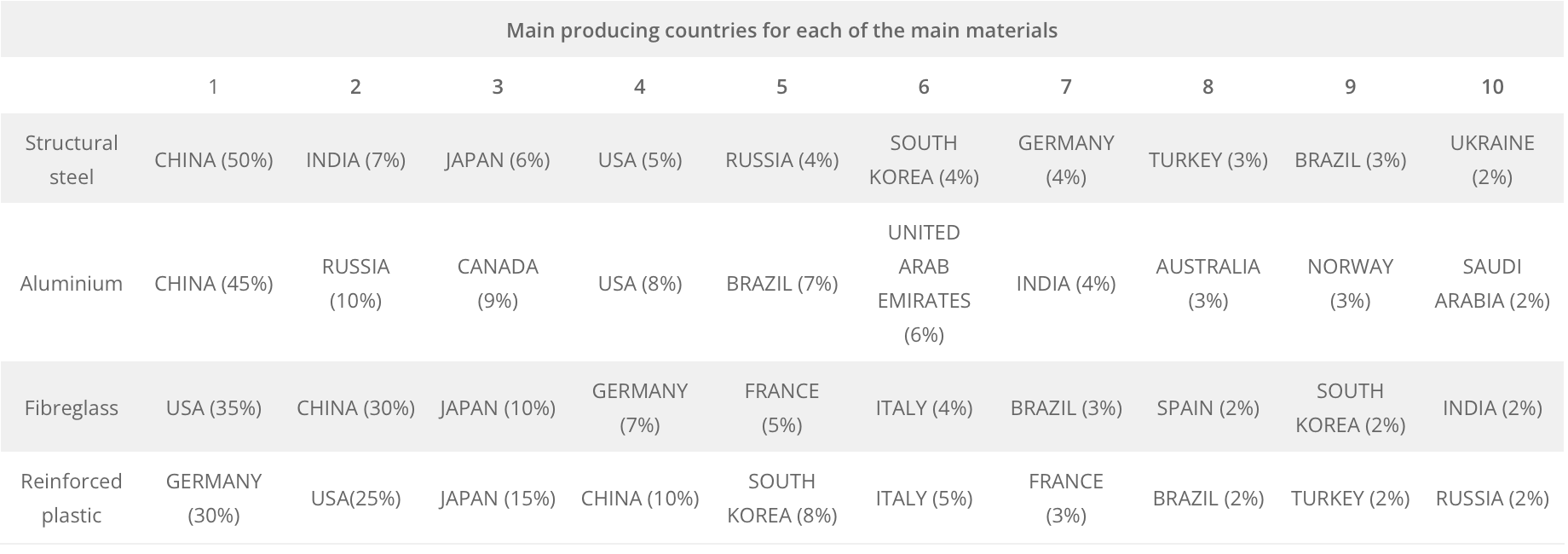
With regard to the structural steel, the China is the main producer in the world with a share of 50%followed by:
- India (7%),
- Japan (6%)
- United States (5%).
Aluminum, used in many structural components is also dominated by chinese production (45%), with Russia (10%) and Canada (9%) among the major exporters. The United Stateswhile producing aluminium, are heavily dependent on imports to cover domestic demand.
Other materials used in the construction of buses are also influenced by the global production distribution: glass fibre (15% of the total weight) sees the United States in the lead (35%), followed by China (30%) and Japan (10%), with Germany (7%) and France (5%) also contributing significantly.
Reinforced plastic, which accounts for 10 per cent, is mainly produced in Germany (30 per cent), the United States (25 per cent), Japan (15 per cent) and China (10 per cent). The remaining materials, which make up about 10% of the mass of a bus, are electronic and interior components from various countries.
Considering the dependence of the US bus building industry on raw materials from high duty countries, there is a possible impact on production costs.
In particular, the 54% duty on Chinese steel and 49% duty on Cambodian aluminium could affect supply chains, necessitating diversification of sources or reallocation of production to mitigate the economic effects of new trade policies.
For more, read our analysis on the european bus market