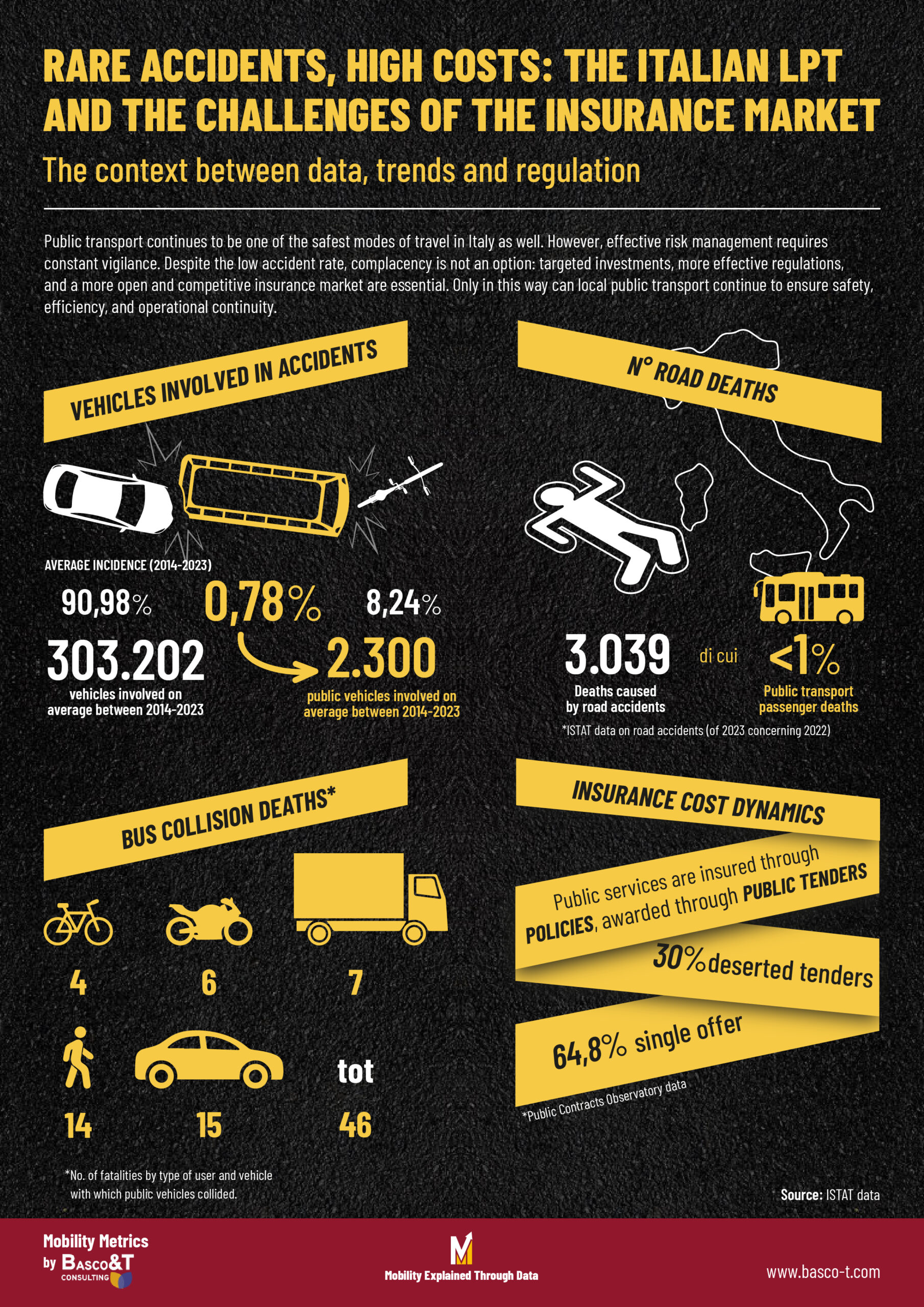
Public transport continues to be one of the safest modes of travel in Italy as well. However, effective risk management requires constant vigilance. Despite the low accident rate, complacency is not an option: targeted investments, more effective regulations, and a more open and competitive insurance market are essential. Only in this way can local public transport continue to ensure safety, efficiency, and operational continuity.
Non-downloadable image, to receive it please contact us at metrics@basco-t.com
Share on:
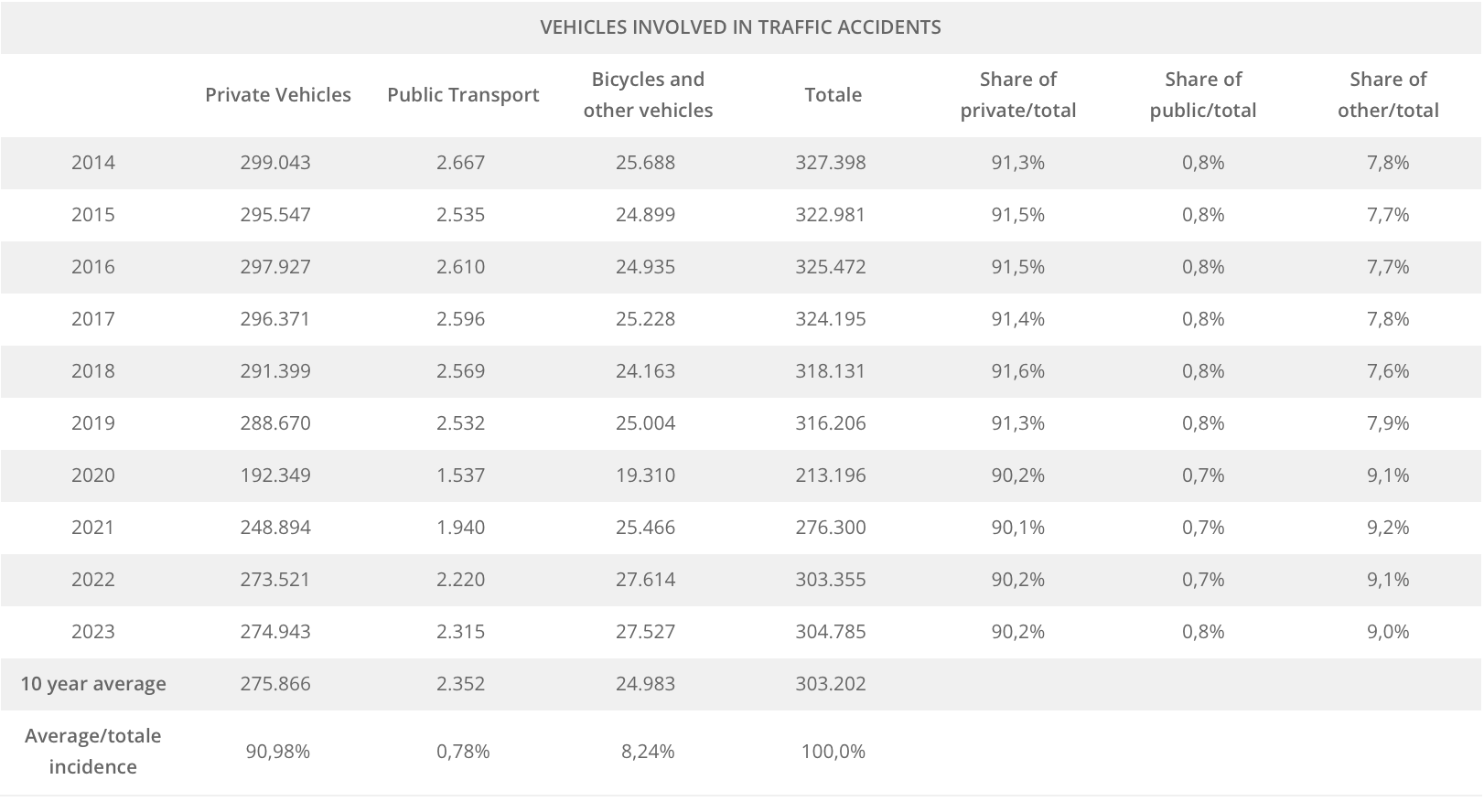
Over the past ten years, more than 90% of road accidents have involved private vehicles, while buses and trams account for less than 1% of the total. This figure reflects not only the different levels of usage but also the effectiveness of the safety rules and protocols applied to public transport.
Basco&T Consulting elaboration on ACEA data ISTAT
Every year, over 275,000 private vehicles are involved in road accidents in Italy, accounting for approximately 91% of the total. This percentage has remained stable throughout the observed period, including during the pandemic, when overall traffic volumes significantly declined. In contrast, public road transport—including buses and trams—represents a very small share of the total number of vehicles involved. On average, just over 2,300 public transport vehicles are implicated annually, corresponding to less than 1% (0.78%) of all incidents. Even during the pandemic years of 2020 and 2021, this share remained stable at around 0.7%.
An intermediate, yet growing role is played by bicycles and other light vehicles, including micromobility devices. On average, about 25,000 of these vehicles are involved in accidents each year, representing 8.2% of the total. Since 2020, this proportion has shown a slight upward trend, exceeding 9% over the most recent three-year period and peaking at 9.2% in 2021.
According to the latest ISTAT report on road accidents (published in 2023 and referring to 2022), there were 3,039 road fatalities in Italy, with significant variation across different modes of transport. The highest number of fatalities occurred among car occupants (1,332), followed by motorcyclists (734), pedestrians (485), and cyclists (200). Pedestrian deaths were primarily caused by collisions with cars (353 cases), while cyclist fatalities mainly involved collisions with cars and heavy vehicles. Electric scooters accounted for 21 deaths, mostly from single-vehicle accidents. Buses and trams were involved in 46 fatal incidents, resulting in casualties across various categories (pedestrians, cyclists, motorcyclists, and car occupants). Among public transport passengers, 28 deaths were recorded, including 23 in incidents without other vehicles involved—such as falls on board or sudden illness.
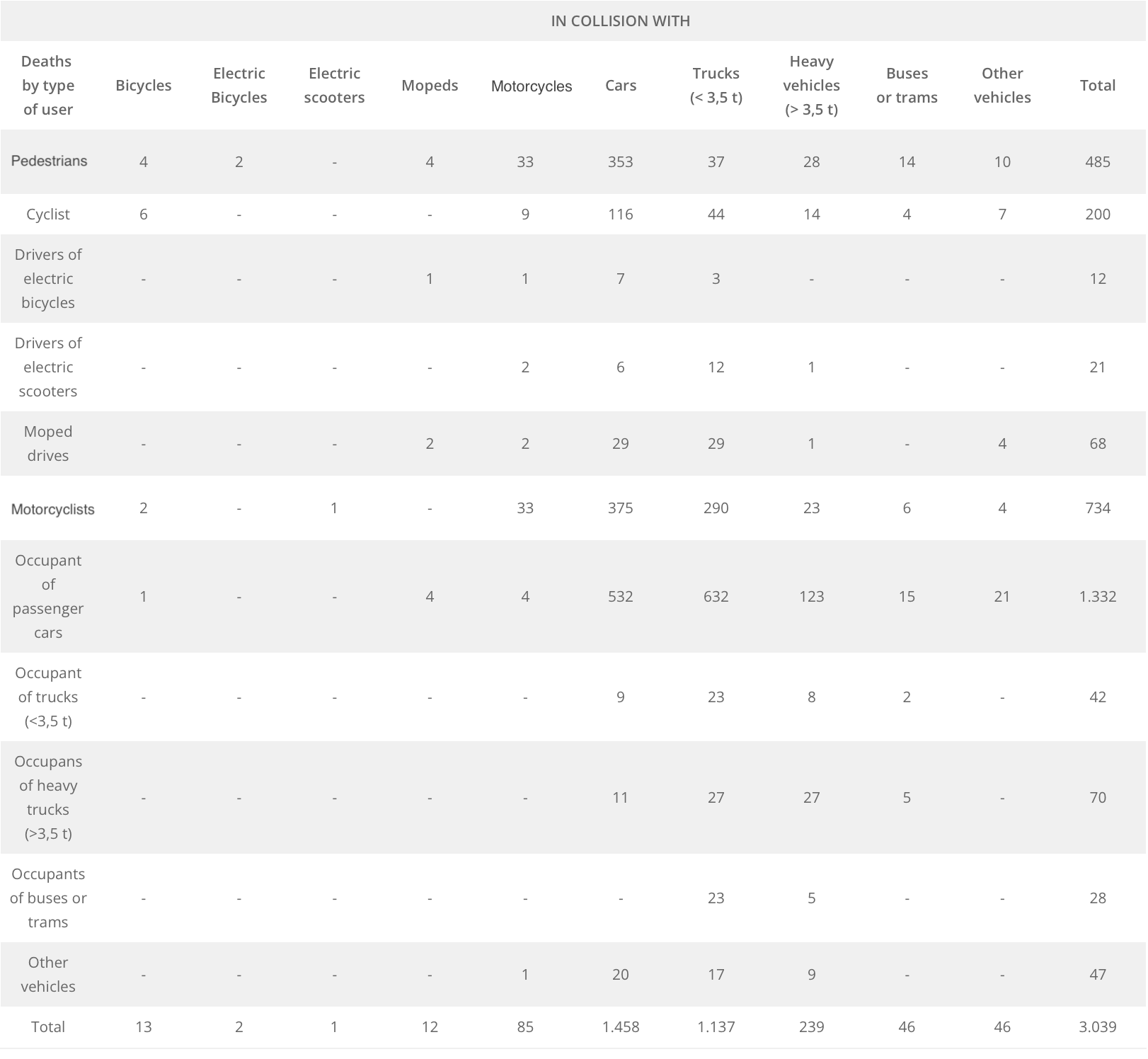
Collision matrix ISTAT
Public transportation accounts for a marginal share of the accident rate: less than 1 percent of total deaths and injuries, lower than even those associated with traditional bicycles and electric micromobility. In contrast, cars and motorcycles are responsible for the majority of fatalities and injuries, with daily use still dominant.
Insurance cost dynamics
When a bus is involved in a road accident, the consequences extend far beyond operational disruptions or media coverage. Every incident has significant economic implications for the transport company involved. Unlike private vehicles, public service fleets are covered by complex insurance policies awarded through public tenders, in accordance with the Public Procurement Code.
Third-party and passenger liability insurance (RCT/RCV) represents a major expense in company budgets, and each accident directly impacts the cost of insurance premiums.
Insurance brokers such as Aon, Marsh, Willis Towers Watson, and Assiteca play an increasingly crucial role, supporting operators in drafting technical specifications, negotiating with insurers, and managing claims.
Tenders are awarded based on the most economically advantageous offer, which considers not only price but also qualitative aspects—such as claims settlement speed and the structure of deductibles.
Although insurance services must be procured through public tenders, the process often faces significant challenges. As highlighted in Determination No. 2 of March 13, 2013, by the former Public Contracts Authority (AVCP), insurance tenders are frequently unsuccessful, either due to a lack of bids or because only one offer is received. Unilateral withdrawal from contracts by providers is also common. These issues lead to increased public spending due to repeated procedures and create serious risks for public authorities—especially in sectors like local public transport, where insurance coverage is mandatory and a prerequisite for institutional operations. According to the Observatory on Public Contracts, over 30% of insurance service tenders—worth a total of approximately €3 billion annually—receive no bids. Moreover, in 64.8% of cases, contracts are awarded based on a single valid offer, indicating a highly concentrated insurance market and specific difficulties in securing liability coverage, including for public transport fleets.
In this context, insuring local public transport fleets remains a critical yet problematic issue: accident rates significantly affect insurance costs, public tenders are often deserted, and market competition is limited. More flexible rules and a more active role for brokers are needed to ensure adequate coverage and safeguard the continuity of a public service that, by its very nature, must be not only widespread and affordable, but also reliable and protected.
In the previous article, we looked at the European overview.