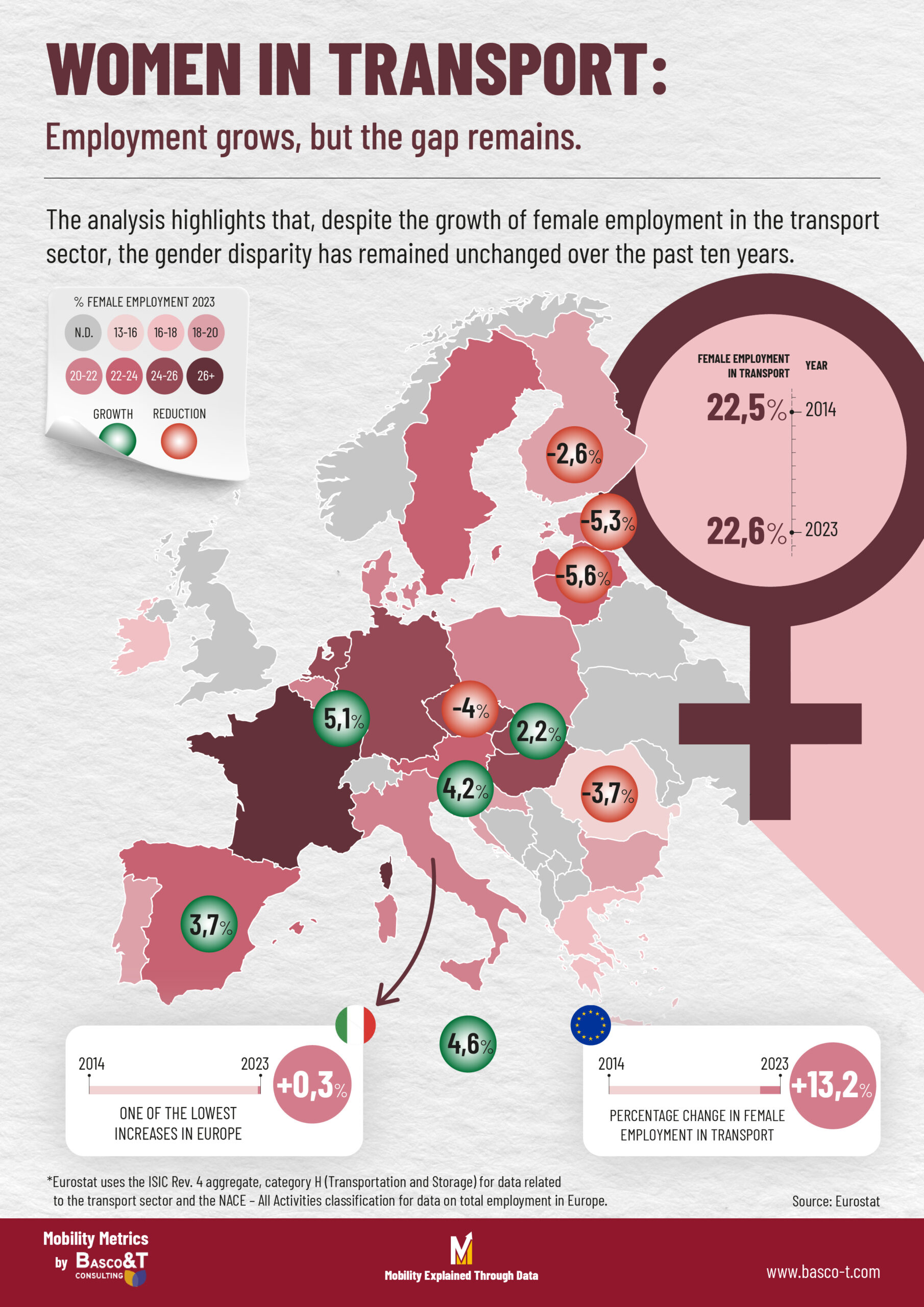
The analysis highlights that, despite the growth of female employment in the transport sector, the gender disparity has remained unchanged over the past ten years.
Share on:
Gender inequality in the transport sector
In the last 10 years, despite a growth of 13.2% in the number of women occupied in the transport (by 2,18 million in 2014 to 2.47 million in 2023), the data EUROSTAT indicate that their share of the total employment in the sector has remained almost unchanged, going from 22.5% to 22.6%. This suggests that the growth of male employment was equally strong, while maintaining altering the gender disparities.
Countries with higher growth in the percentage of women in transport:
- Luxembourg (+5,1%), Malta (+4.6%), and Spain (+3,7%) have recorded the most significant increases
- Slovenia (+4.2%), and Slovakia (+2,2%) confirmed the positive trend.
Countries with a reduction of the share of women in transport:
- Latvia (-5,6%) and Estonia (Down 5.3%) recorded the largest decreases drastic, indicating a reduction in opportunities for women.
- Czech Republic (-4,0%), Romania (-3,7%), and Finland (-2,6%) have followed a similar trend.
Countries such as Germany (down 0.4%) and France (+0,4%) showed stability in women's participation, without significant changes. Italy has recorded a slight increase in the percentage of women employed in the transport industry, passing from the 20,5% in 2014 to 20.8% in 2023 (+0,3%). This increase is among the lowest in Europe, indicating that the growth in female employment has been very low.
Despite some progress, the women are still less than a quarter of the workforce in the transport sector in Europehighlighting a persistent male predominance. However, this disparity opens the way to new inclusion policies and programs aimed at promote the access of women to the industry.
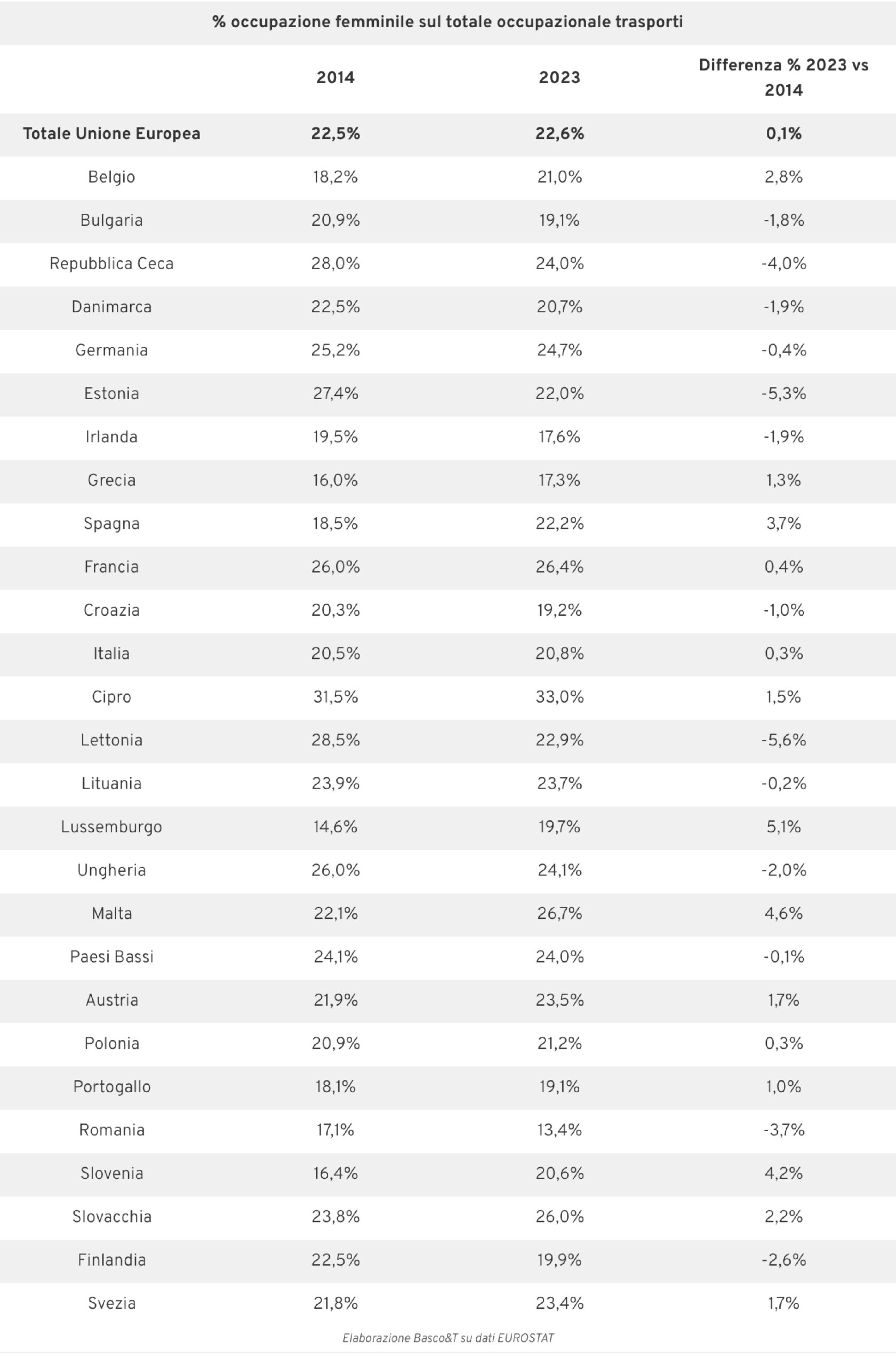
Notes: *Eurostat uses the aggregate ISIC Rev. 4, the category H (Transportation and Storage) for the data related to the transport sector and the classification NACE – All Activities for the data on total employment in Europe.